Leave A Message
If you are interested in our products and want to know more details,please leave a message here,we will reply you as soon as we can.

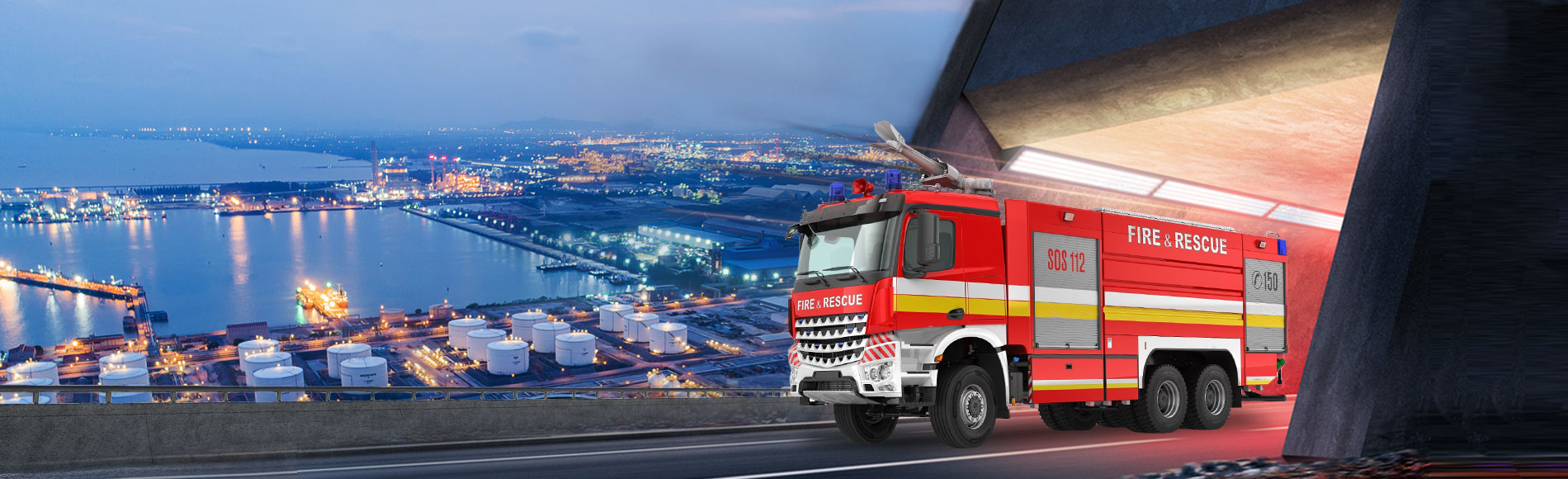
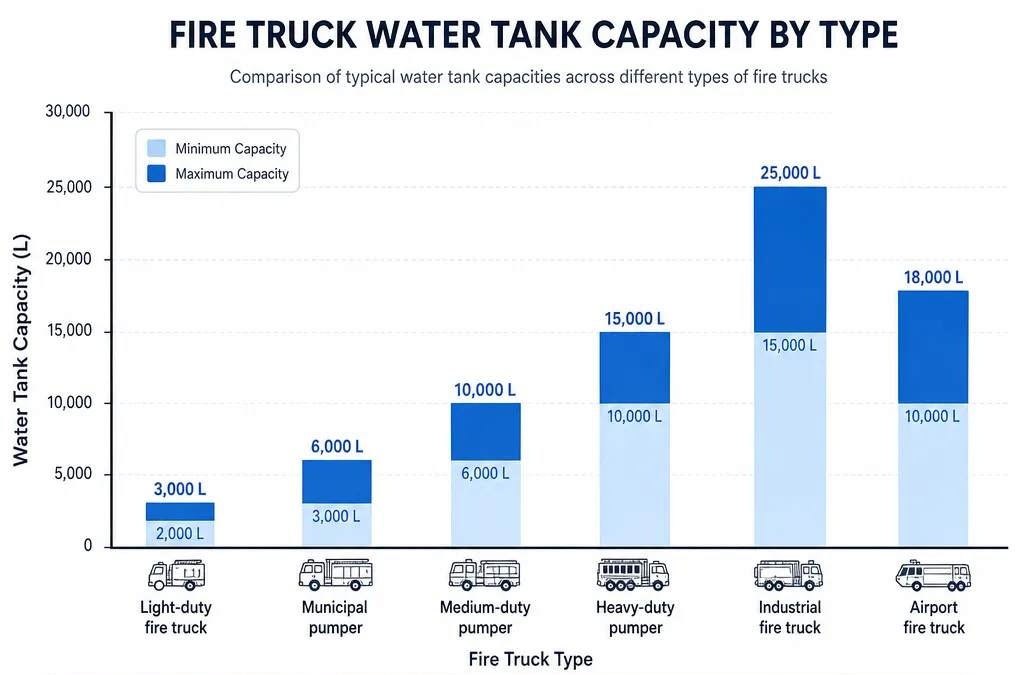
How much water can a fire truck carry? This is one of the first questions our customers face when selecting a fire truck. There is no single fixed number — it depends on vehicle type, chassis capacity, design purpose, and regional regulations, ranging from 2,000 liters light-duty units to 25,000 liters industrial fire trucks. But a larger tank does not always mean better performance; fire fighting vehicle water tank capacity must be properly matched with pump flow rate, monitor discharge rate, and chassis capacity to deliver effective firefighting results.
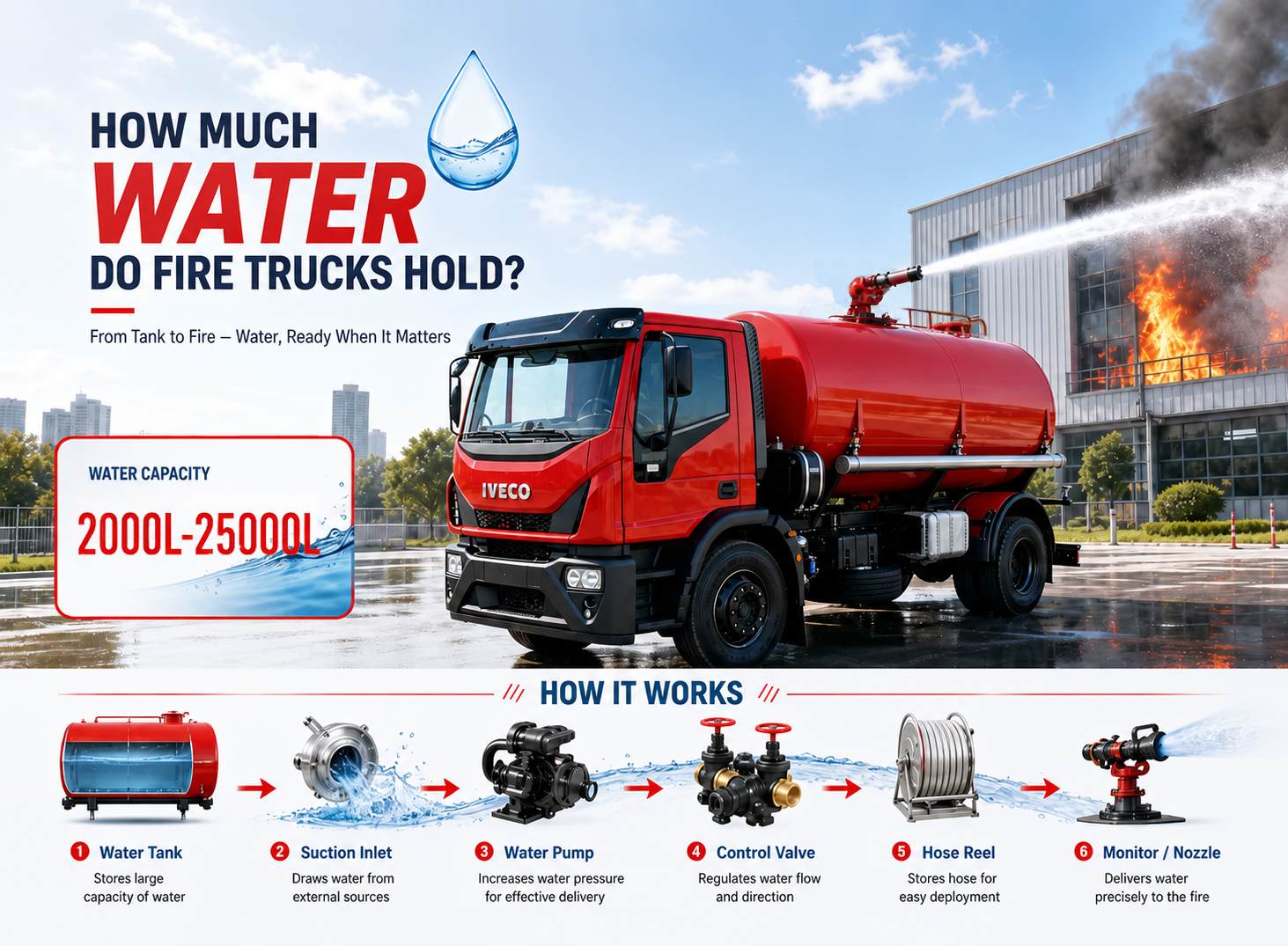
This article starts with the fundamentals of fire truck water tank capacity, analyzes typical storage ranges for different vehicle types, examines the key factors that influence tank design, and provides practical purchasing guidance.
Key Takeaways:
Fire truck water tank capacity typically ranges from 2,000 to 25,000 liters
Different fire truck types have different tank capacities
A larger tank does not mean better firefighting capability
Tank capacity must be matched with pump flow, monitor flow, and chassis capacity
Industrial firefighting typically requires large tanks, while municipal firefighting prioritizes maneuverability
Pumper Trucks: These are the most common municipal fire trucks. They rely primarily on fire hydrants for water supply and carry approximately 1,900–3,800 liters of onboard water for initial attack. The core of these vehicles is the pump, not the tank — they are designed to deliver pressurized water once connected to a hydrant.
Tanker Trucks (Water Tenders): These vehicles are dedicated to transporting large volumes of water, with tank capacities typically exceeding 11,400 liters. They play a critical role in rural and remote areas where fire hydrants are not available, shuttling water from water sources to the fire scene for pumpers to use.
Pumper-Tankers: These vehicles combine pumping and water transport functions in one unit. They can both discharge water for firefighting and supply other vehicles. Tank capacities typically range from 5,700 to 11,400 liters, making them a versatile solution for fire departments.
| Fire Truck Type | Typical Tank Capacity | Primary Application |
|---|---|---|
| Light-duty fire truck | 2,000–3,000 L | Urban quick response, initial attack |
| Municipal pumper | 3,000–6,000 L | Municipal firefighting, structural fires |
| Medium-duty pumper | 6,000–10,000 L | Combined urban and industrial tasks |
| Heavy-duty pumper | 10,000–15,000 L | Extended operations, long-distance response |
| Industrial fire truck | 15,000–25,000 L | Oil, chemical, mining firefighting |
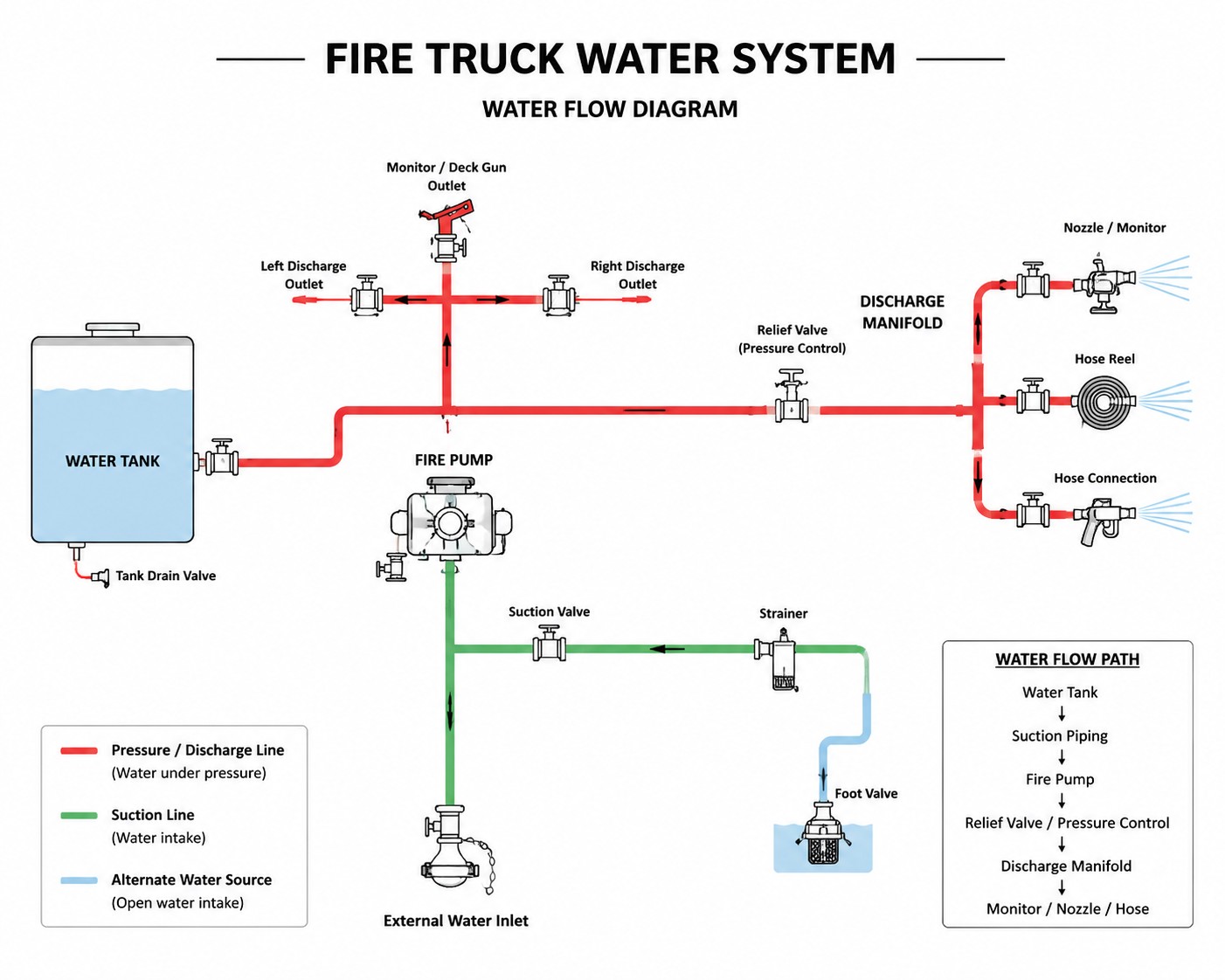
A fire truck is not just a mobile water tank — it is a complete water delivery system. Water stored in the tank must pass through several key components before it can reach the fire. The complete flow path is:
Water Tank → Intake Piping → Fire Pump → Pressure Control System → Discharge Manifold → Fire Monitor/Nozzle/Hose
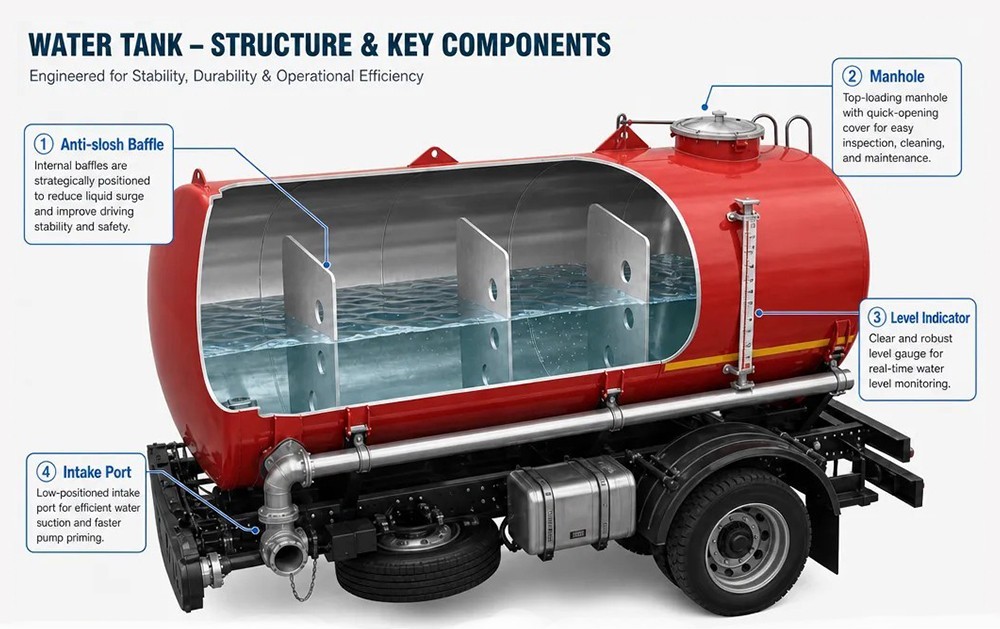
Water Tank
The water tank is the core storage container. Its design directly affects usable water volume and service life.
Anti-slosh baffles: Internal partitions that prevent water surge during driving and sharp turns, maintaining vehicle stability.
Corrosion-resistant materials: Tanks are typically made of 304 stainless steel or coated carbon steel to resist long-term water corrosion.
Manhole: An access point on top of the tank for internal inspection, cleaning, and maintenance.
Level indicator: Displays remaining water in real time, helping operators plan firefighting strategies.
Intake Piping
The intake piping delivers water from the tank to the fire pump. It is typically large-diameter to reduce flow resistance, equipped with a check valve to prevent backflow, and fitted with a strainer to prevent debris from entering the pump.
Fire Pump
The fire pump is the power core of the water system. It is responsible for:
Building water pressure to overcome pipe resistance and vertical lift
Increasing flow to meet firefighting demand
Providing continuous water supply for extended operations
Discharge System
Pressurized water is delivered through the discharge manifold to various delivery devices, including fire monitors (high-volume remote firefighting), hand-held nozzles (precision firefighting), high-pressure hose reels (for localized fires or quick response), and multiple discharge outlets (simultaneous hose connections).
Many assume that a 10,000-liter tank can discharge 10,000 liters of water. In reality, the usable water volume is typically lower than the nominal tank capacity. The main reasons are:
1. Suction inlet height restriction
The fire pump's suction inlet is typically positioned at a certain height above the bottom of the water tank, rather than being flush with the tank floor. This is designed to prevent drawing in sediment and impurities that have settled at the bottom. However, it also means that approximately 5%–10% of the water at the very bottom cannot be drawn in and utilized by the pump.
2. Preventing air from entering the fire pump
The suction inlet must remain fully submerged at all times to prevent air from being drawn into the pump body. Once air is sucked in, it can cause the pump to run dry, lead to cavitation (where the impeller rotates in a mixture of air bubbles and water, and the collapsing bubbles generate shock waves that damage the impeller), and result in a sudden drop in pressure. In severe cases, this can damage or even destroy the fire pump.
3. Effect of baffles inside the tank
Baffles divide the tank into multiple compartments. While they effectively suppress water surge during vehicle movement, the flow holes at the bottom of these compartments are relatively small. At low water levels, the flow rate of water is restricted, preventing some of the water from reaching the suction pipe area in a timely manner.
| Nominal Capacity | Usable Capacity | Loss Ratio |
|---|---|---|
| 5,000 L | Approximately 4,500–4,700 L | 6%–10% |
| 10,000 L | Approximately 9,000–9,400 L | 6%–10% |
| 15,000 L | Approximately 13,500–14,100 L | 6%–10% |
Matching principle: If the pump flow rate is too high, the tank will be depleted within minutes. If the flow rate is too low, the large tank capacity cannot be fully utilized. A general recommendation is that the continuous discharge time at rated flow should be no less than 5–10 minutes.
| Tank Capacity | Recommended Pump Flow | Recommended Application |
|---|---|---|
| 2,000 L | 30 L/s | Small fire trucks, community firefighting |
| 3,000–5,000 L | 40 L/s | Municipal firefighting, initial attack |
| 6,000–8,000 L | 60 L/s | Municipal firefighting, structural fires |
| 10,000–15,000 L | 80 L/s | Industrial firefighting, extended operations |
| 15,000 L and above | 100 L/s and above | Petrochemical, airport firefighting |
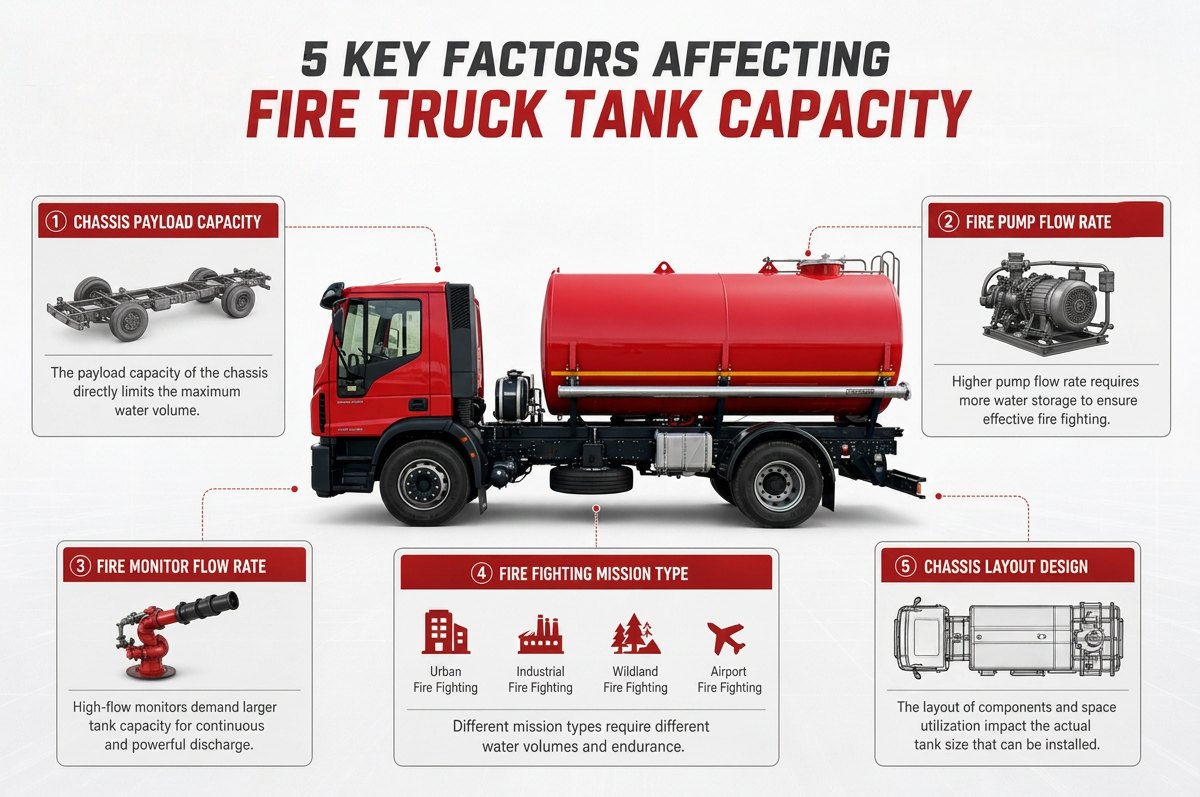
1. Chassis load capacity
The water tank capacity is primarily limited by the vehicle's gross vehicle weight (GVW). Common fire truck chassis include 4×2, 6×4, and 8×4 drive configurations. The longer the wheelbase and the greater the number of axles, the higher the total load capacity. For example, a 6×4 chassis can typically accommodate a larger water tank than a 4×2 chassis. Additionally, the installation position of the water tank must take into account the front and rear axle load distribution to ensure the vehicle maintains stability and maneuverability under both full-load and no-load conditions.
2. Fire pump flow rate
A reasonable match between the fire pump flow rate and the water tank capacity is essential. For a pump with a flow rate of 30 L/s, a 10,000-liter tank can be emptied in approximately 5.5 minutes; while a 60 L/s pump would drain it in less than 3 minutes. The higher the pump flow rate, the faster the water tank is depleted. Therefore, when selecting specifications, a high-flow pump should be paired with a larger tank to ensure sufficient continuous operation time. Conversely, pairing a low-flow pump with an oversized tank results in wasted vehicle payload and cost.
3. Fire monitor flow rate
Fire monitors are major water consumers. Large monitors can have flow rates of 48–100 L/s or more. A high-flow monitor can deplete an entire water tank within minutes. Therefore, fire trucks equipped with high-flow monitors must either be fitted with correspondingly large-capacity tanks or be able to quickly connect to an external water source.
4. Type of firefighting mission
Different types of fires impose varying requirements on water tank capacity. For urban structural fires, firefighters can typically connect to hydrants within 3–5 minutes, so the on-board tank is mainly used for initial suppression, and the capacity requirement is relatively moderate. For industrial fires, the fire scene is often far from hydrants and firefighting operations last longer, necessitating large-capacity tanks of over 10,000 liters. For wildfires, fire trucks need to travel long distances and sustain continuous water discharge, making both capacity and endurance critical.
5. Chassis Layout
The arrangement of the water tank, foam tank, and equipment compartments on the chassis directly affects the maximum installable tank capacity. The engine location determines the available space; the inclusion of foam tanks occupies some volume; and the number and size of equipment compartments also directly impact the final tank capacity.
1. How much water can a fire truck typically carry?
Most municipal fire trucks carry 3,000–10,000 liters. Large industrial fire trucks can reach 15,000–25,000 liters, while mini fire trucks typically carry 500–1,500 liters, depending on the vehicle type and purpose.
2. Which type of fire truck has the largest tank capacity?
Large industrial fire trucks and airport fire trucks typically have the largest tanks, with some models exceeding 20,000 liters.
3. Is a larger tank always better?
Not necessarily. Tank capacity must be matched with chassis capacity, pump performance, and actual application requirements. Pursuing a larger tank alone can lead to reduced maneuverability and higher costs.
4. How much does a fully loaded fire truck weigh?
It depends on the vehicle type and tank capacity. 10,000 liters of water weighs approximately 10 tons. When combined with the vehicle's curb weight (typically 10–15 tons), the fully loaded weight can reach 20–25 tons, requiring an appropriately rated chassis.
5. Can a fire truck refill while fighting a fire?
Yes. Fire trucks can continuously refill from fire hydrants, natural water sources, or water tenders, enabling sustained firefighting operations.
6. Does a foam fire truck have a smaller water tank than a water tender?
Typically, yes. Foam fire trucks must reserve space for a foam tank in addition to the water tank, so the water tank capacity is usually reduced under the same chassis conditions.
7. How do I determine the right tank capacity for my project?
Consider fire type, water supply conditions, pump flow rate, chassis capacity, and project requirements. Choose the capacity that best matches your needs rather than simply pursuing the largest tank available.
Fire truck water tank capacity typically ranges from 2,000 to 25,000 liters, with different capacities suited to different operating scenarios. Municipal firefighting prioritizes maneuverability — 3,000–6,000 liters is sufficient for initial attack, relying on hydrants for sustained supply. Industrial and airport firefighting requires 15,000 liters or more for long-distance and extended operations. Wildland firefighting requires a balance between capacity and off-road capability, with 6,000–10,000 liters being a common configuration.
When selecting a fire truck, tank capacity is just one factor. It must be properly matched with pump flow, monitor configuration, chassis capacity, and operational requirements to deliver effective firefighting performance.


You may be interested in the following information
The effectiveness of firefighting operations depends heavily on the reliability and design of a fire truck's water supply system. A properly designed fire truck water system allows the vehicle to fill its water tank from an external water source, draft water from suitable static sources when necessary, and deliver pressurized water through hoses, nozzles, or fire monitors. This article explains how fire trucks fill their tanks from hydrants or suitable external water sources, how the priming system works during drafting, and how the fire pump pressurizes water for discharge through hoses, nozzles, or fire monitors. Quick Answer A fire truck normally fills its water tank in two main ways: 1. External water supply: Water is supplied from a hydrant or another pressurized source through the truck's external filling connection. 2. Drafting from a static water source: A suction hose, strainer, fire pump, and priming system are used to draw water from a pond, river, lake, or other suitable source. Once water is available in the onboard tank, the fire pump draws water from the tank and sends it to hose outlets, nozzles, or a fire monitor at the required pressure and flow rate. The complete water flow path can be simplified as: External water source → Intake/Filling system → Water tank → Fire pump → Discharge outlets I. Filling the Tank from a Fire Hydrant Connecting to a suitable fire hydrant is one of the most direct and commonly used ways to fill a fire truck's water tank when a pressurized water supply is available. It generally requires less equipment and setup than drafting from a static source. Equipment needed: A suitable filling hose with a coupling compatible with the hydrant and the fire truck's external fill connection. Hose diameter, coupling type, and connection standards vary by vehicle, manufacturer, and region. Step-by-step procedure: • Connect one end of the hose to the hydrant outlet and the other end to the external fill port on the fire truck • Open the hydrant gradually and confirm that water is flowing normally through the filling line • Water flows into the onboard tank through the filling line under the available water supply pressure • Monitor the tank level gauge and close the hydrant when the tank is full Key considerations: • Ensure the hose connection is tight to prevent leaks • Verify that the external fill valve on the truck is fully open before starting • Do not leave the filling operation unattended. Monitor the tank level and stop filling when the tank reaches its specified capacity to prevent overflow and unnecessary stress on the tank venting system. II. Drafting Water from a Static Source via the Fire Pump When a hydrant is not available—common in rural areas, forests, or industrial sites—fire trucks must draft water from static sources such as ponds, rivers, lak...
Details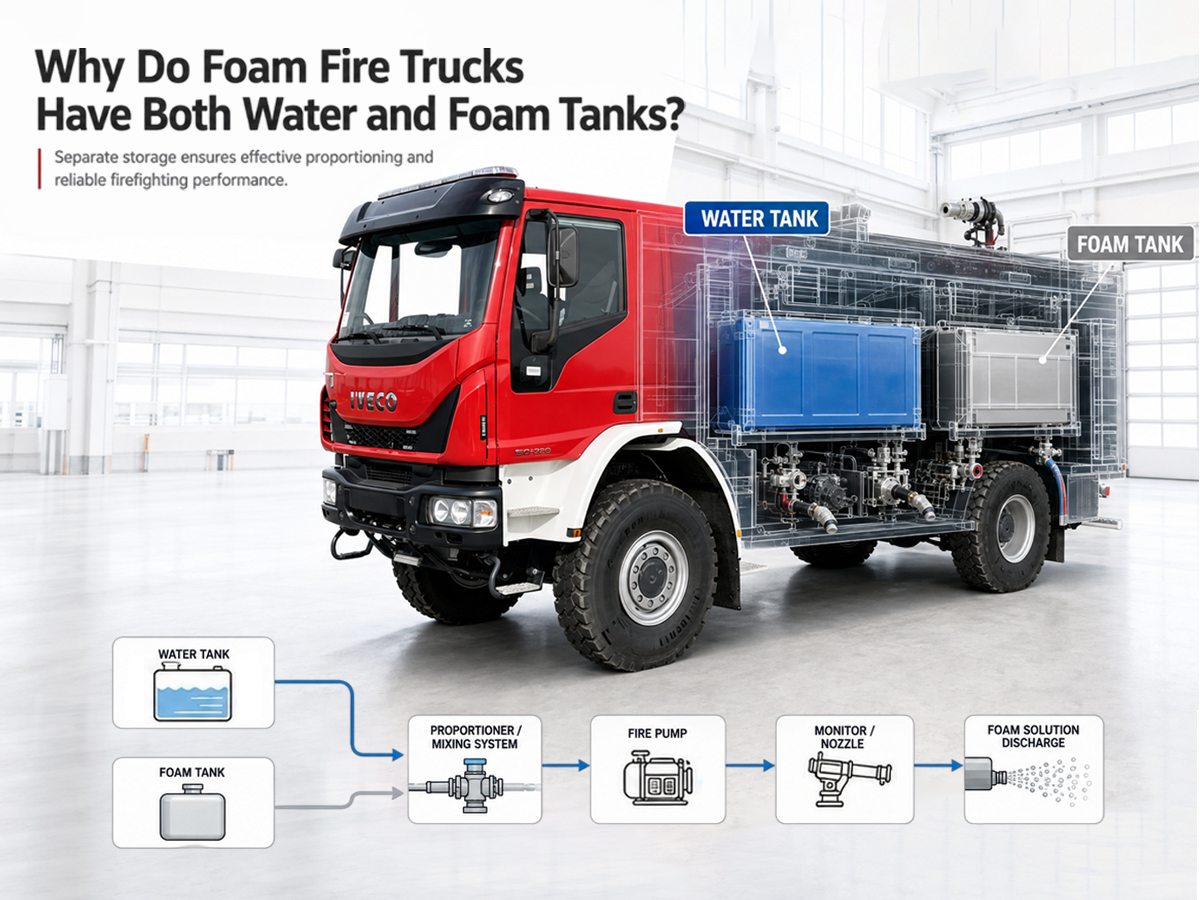
Foam fire trucks combine a dedicated foam concentrate tank with a separate water tank and a precision proportioning system. They use a proportioning system to introduce foam concentrate into the water stream at a specified concentration, commonly 1%, 3%, or 6%, depending on the foam concentrate and firefighting application. The dual-tank design allows firefighters to use water alone when foam is not required and introduce foam concentrate only when needed. This improves operational flexibility, helps control foam consumption, and allows the firefighting system to be configured for different fire hazards. The core working principle and key technology of foam fire trucks, particularly why they have both water and foam tanks—are the focus of many customers. Let's learn about it today. Quick Answer: Foam fire trucks normally use separate water and foam concentrate tanks because water and foam concentrate are required in different proportions and are intended to be combined during operation rather than stored as a premixed solution for long periods. The water tank provides the main water supply, while the foam tank stores concentrated foam agent. A proportioning system controls how much concentrate is introduced into the water stream, allowing the truck to switch between water-only and foam firefighting modes. I. What Are the Main Components of a Foam Fire Truck? 1. Water Tank Corrosion-resistant construction (carbon steel with anti-corrosion coating or stainless steel), capacities ranging from 4,000 to 6,000 liters. Equipped with baffles to reduce liquid surging during vehicle movement and flexible mounts to absorb chassis flexing on rough terrain. 2. Foam Concentrate Tank Stainless steel construction to resist chemical attack from active foam concentrates, typically 500-2,000 liters capacity. Depending on the foam concentrate and system design, the tank may incorporate features such as circulation or agitation arrangements to help maintain concentrate condition during storage. 3. Foam Proportioning System A proportioning system that draws foam concentrate from the dedicated foam tank and introduces it into the water stream at a specified concentration. Depending on the foam concentrate and system design, proportioning may use balanced-pressure, pump-driven, or venturi-based technology. 4. Fire Pump The fire pump is the power source of the entire foam system. It draws water from the water tank and pressurizes it to the required flow and pressure for firefighting operations. The pump is typically driven by the vehicle's power take-off (PTO) or an independent engine, and must be compatible with the proportioning system to ensure accurate foam concentrate injection across varying flow rates. Common configurations include single-stage centrifugal pumps for standard operations and multi-stage pumps for high-pressure applications. 5. Foam Monitor The foam monitor deliver...
Details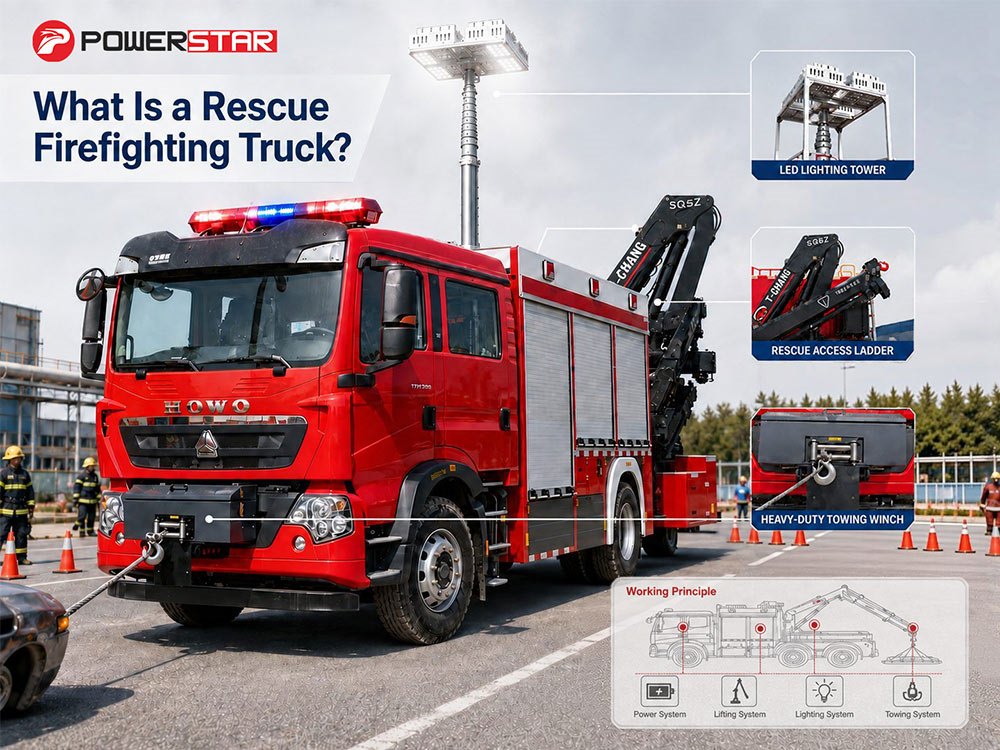
A rescue fire fighting truck is a specialized emergency vehicle designed to perform both fire suppression and rescue operations. Unlike standard fire trucks that focus primarily on extinguishing fires, rescue fire fighting trucks combine firefighting equipment with rescue tools, lifting and hoisting devices, cutting and spreading tools, winches, generators, and lighting systems. This article explains what a rescue fire fighting truck is, how it differs from other fire apparatus, what equipment it carries, and when it is deployed. I. What Is a Rescue Fire Fighting Truck? A rescue fire fighting truck is a multi-purpose emergency vehicle that combines firefighting capabilities with specialized rescue equipment. It is primarily used to provide comprehensive emergency response capability when incidents occur involving people, vehicles, buildings, or industrial facilities. Depending on the vehicle configuration, rescue fire fighting trucks can be equipped with a wide variety of rescue tools and firefighting systems. The actual equipment selection varies based on the vehicle's intended use. For example, a vehicle configured for urban rescue may have a different equipment layout than one designed for industrial rescue, earthquake response, or highway traffic accident recovery. II. What Equipment Does a Rescue Fire Fighting Truck Carry? The equipment carried on a rescue fire fighting truck depends on the vehicle's design and its intended application. However, the equipment on most models can be organized into several main categories: firefighting equipment, rescue tools, power equipment, lighting equipment, lifting and towing devices, and personal protective gear. 1. Firefighting Equipment Firefighting equipment may include fire extinguishers, fire hoses, fire nozzles, portable pumps, water tanks, foam firefighting systems, fire monitors, and other suppression tools. 2. Hydraulic Rescue Tools Hydraulic rescue tools are commonly used in traffic accident rescue operations for cutting, spreading, or lifting damaged vehicle structures. Common equipment includes hydraulic cutters, hydraulic spreaders, and hydraulic rams. 3. Power Generator Generators provide electrical power for rescue tools, lighting equipment, communication devices, and other equipment when no external power source is available at the scene. 4. Lighting Equipment Emergency lighting systems help rescue personnel operate during nighttime, inside buildings, on highways, and in other low-light conditions. 5. Winches and Towing Equipment Some rescue fire fighting trucks can be equipped with winches and towing equipment for moving damaged vehicles or handling heavy objects during rescue operations. III. Rescue Fire Fighting Truck vs Standard Fire Truck A standard fire truck is typically used primarily for fire suppression. It may be equipped with fire pumps, water tanks, foam tanks, fire hoses, fire n...
Details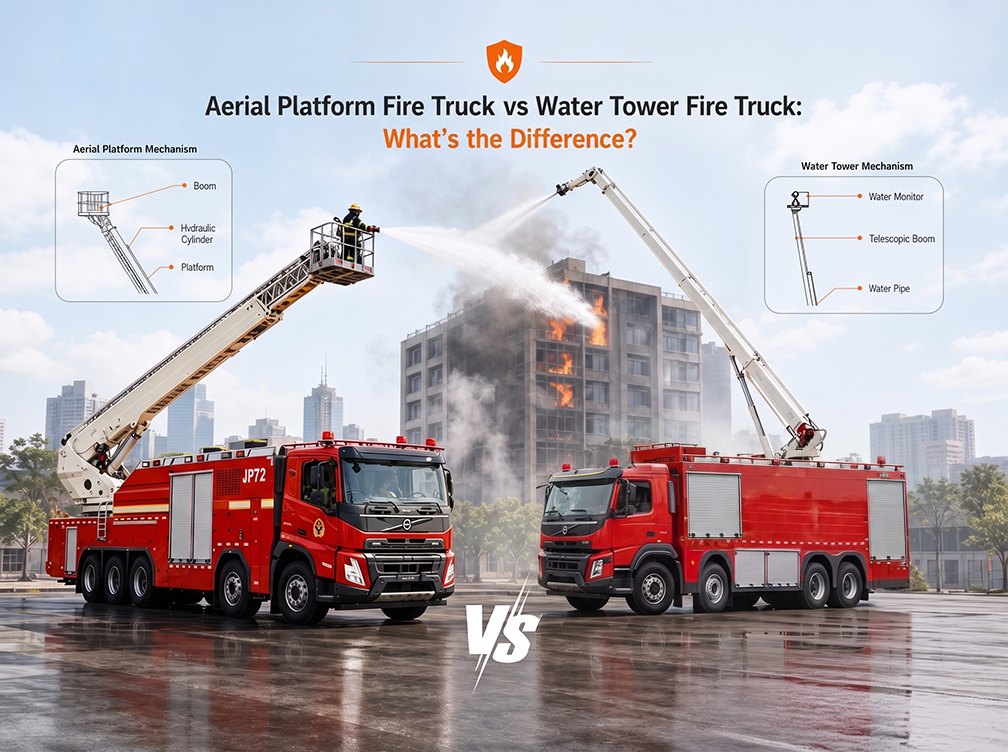
When it comes to fighting fires in high-rise buildings, industrial facilities, or large warehouses, aerial fire trucks are indispensable. But among the various types of aerial apparatus, two often cause confusion: the aerial platform fire truck and the water tower fire truck. While they may look similar at first glance—both feature hydraulic booms and are designed for elevated firefighting—they serve fundamentally different missions. This article breaks down the key differences between these two vehicle types, helping fire service professionals, procurement managers, and equipment distributors make informed decisions based on operational needs. » I. What Are Aerial Platform Trucks? An aerial platform fire truck is a specialized fire apparatus equipped with a telescopic or articulated aerial boom and a working platform, also known as a basket. The platform allows firefighters to reach elevated positions and perform rescue, firefighting, and other high-level operations. Aerial Platform Fire Truck An aerial platform fire truck is equipped with a folding or folding-telescopic combination boom, a personnel platform, a turntable, and firefighting devices. The defining feature is the work platform (bucket) at the end of the boom, where firefighters can stand to perform rescue and firefighting operations. Key characteristics:• Equipped with a platform that can carry 750 lbs to over 1,500 lbs of personnel and equipment• Designed for both rescue and firefighting—firefighters can operate directly from the platform• Platform can be used with descent control devices, hydraulic winches, or rescue chutes• Broader horizontal reach and greater working span compared to water towers » II. What Are Water Tower Fire Trucks? A water tower fire truck is an aerial firefighting vehicle designed primarily to deliver water or foam from an elevated position. Instead of carrying firefighters in a working platform, it uses an aerial boom or telescopic structure to position a high-flow fire monitor above the ground. Water Tower Fire Truck A water tower fire truck consists of a folding or folding-telescopic combination boom, a turntable, and a fire monitor mounted at the boom tip—without a personnel platform. The boom is typically constructed in multiple sections, articulated for both vertical elevation and horizontal reach. A high-flow fire monitor is fixed at the terminal end, connected to the water supply system through internal piping routed along the boom structure. The turntable supports full 360° rotation, while hydraulic cylinders control boom elevation, extension, and folding movements. Key characteristics:• No personnel platform—firefighters operate from the ground via remote control• Focused exclusively on elevated fire suppression, not rescue• Delivers exceptionally high water flow—exceeding 2,000 gallons per minute on ma...
Details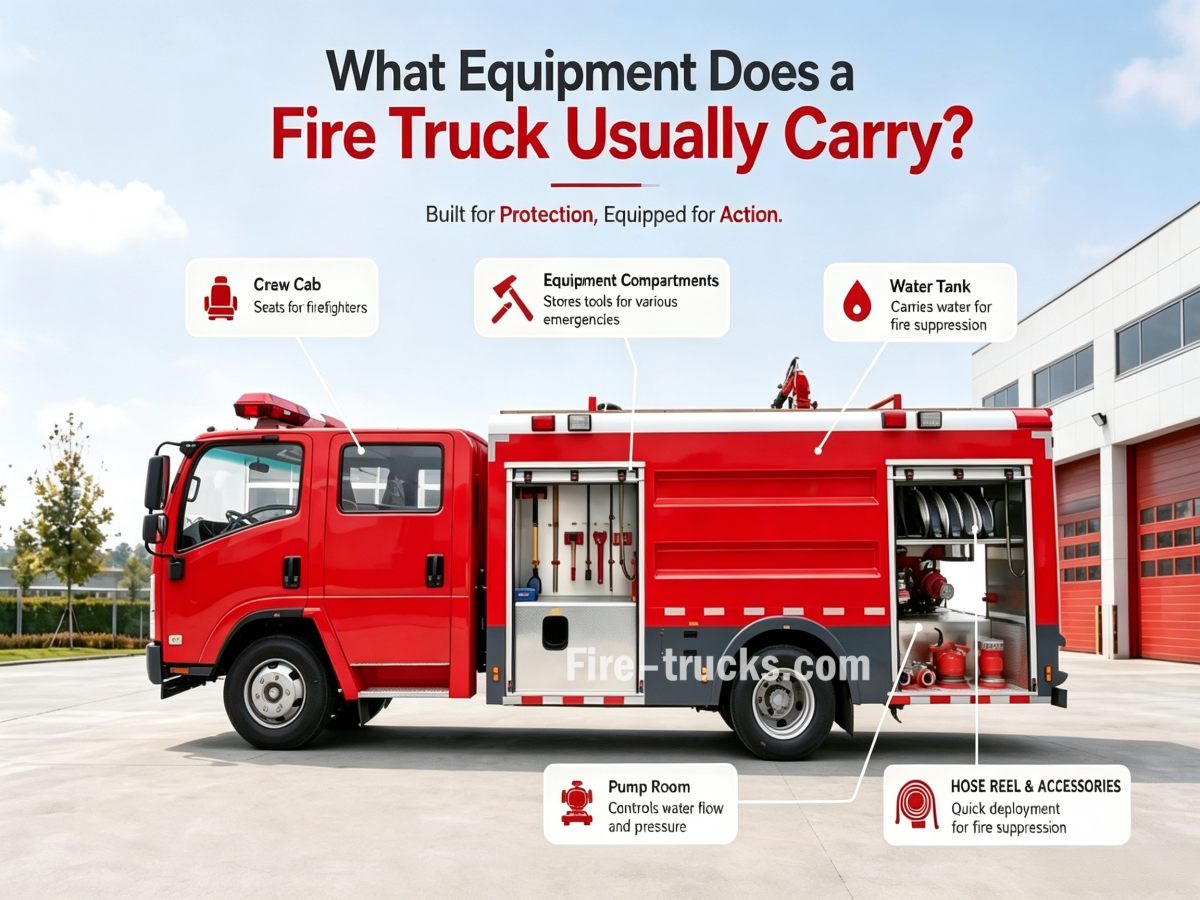
A fire truck typically carries firefighting, water supply, rescue, and safety protection equipment. Common equipment includes fire pumps, water tanks, fire hoses, fire nozzles, fire monitors, valves, fire ladders, rescue tools, protective gear, and communication devices. This article systematically breaks down the classification, functions, and selection considerations of standard fire truck equipment, helping procurement professionals and end-users build a complete understanding of fire apparatus configurations. I. Classification of Fire Truck Equipment 1. Firefighting Equipment — Core tools for direct fire suppression, including fire nozzles, fire monitors, fire hoses, water dividers, and adapters. 2. Rescue and Breaching Equipment — Tools for creating access routes for rescue and firefighting operations, including hydraulic rescue tools, fire axes, pry bars, crowbars, cut-off saws, and chain saws. 3. Rescue and Life-Saving Equipment — Equipment for search, transfer, and protection of personnel, including stretchers, rescue ropes, safety hooks, descent control devices, self-contained breathing apparatus (SCBA), and spare air cylinders. 4. Smoke Exhaust and Lighting Equipment — Equipment for improving fireground conditions, including smoke ejectors, mobile lighting towers, and portable high-intensity searchlights. 5. Personal Protective Equipment (PPE) — Gear to protect firefighter safety, including helmets, structural firefighting protective clothing, gloves, boots, and safety belts. 6. Communication and Reconnaissance Equipment — Equipment for fireground information gathering and command coordination, including two-way radios, thermal imaging cameras, and toxic gas detectors. II. Firefighting Equipment on Fire Trucks 1. Fire Pump The fire pump is the power source for all firefighting operations. It mechanically pressurizes water, giving it sufficient kinetic energy to complete the full process of "drafting → pressurizing → delivering → discharging." Typical fire pump specifications: • Standard Pressure Fire Pump (CB10/30 type): Flow rate ≥30L/s, rated pressure 1.0MPa, rear-mounted installation. Suitable for standard water tenders and foam fire trucks, meeting most urban and industrial firefighting water supply requirements. • Medium/High-Pressure Fire Pump: Low-pressure flow 30L/s at 1.0MPa, high-pressure flow 20L/s at 2.0MPa, rear-mounted installation. The dual-pressure design supports both high-volume supply (low pressure) and long-distance/high-rise delivery (high pressure) in a single pump. Ideal for urban main battle fire trucks and high-rise firefighting scenarios. • High-Pressure Fire Pump: Flow rate 10-15L/s, pressure up to 4.0MPa or higher, rear-mounted or midship-mounted. Used in high-pressure water mist systems, commonly found on airport fire trucks and specialized industrial vehicles. Complete water syste...
Details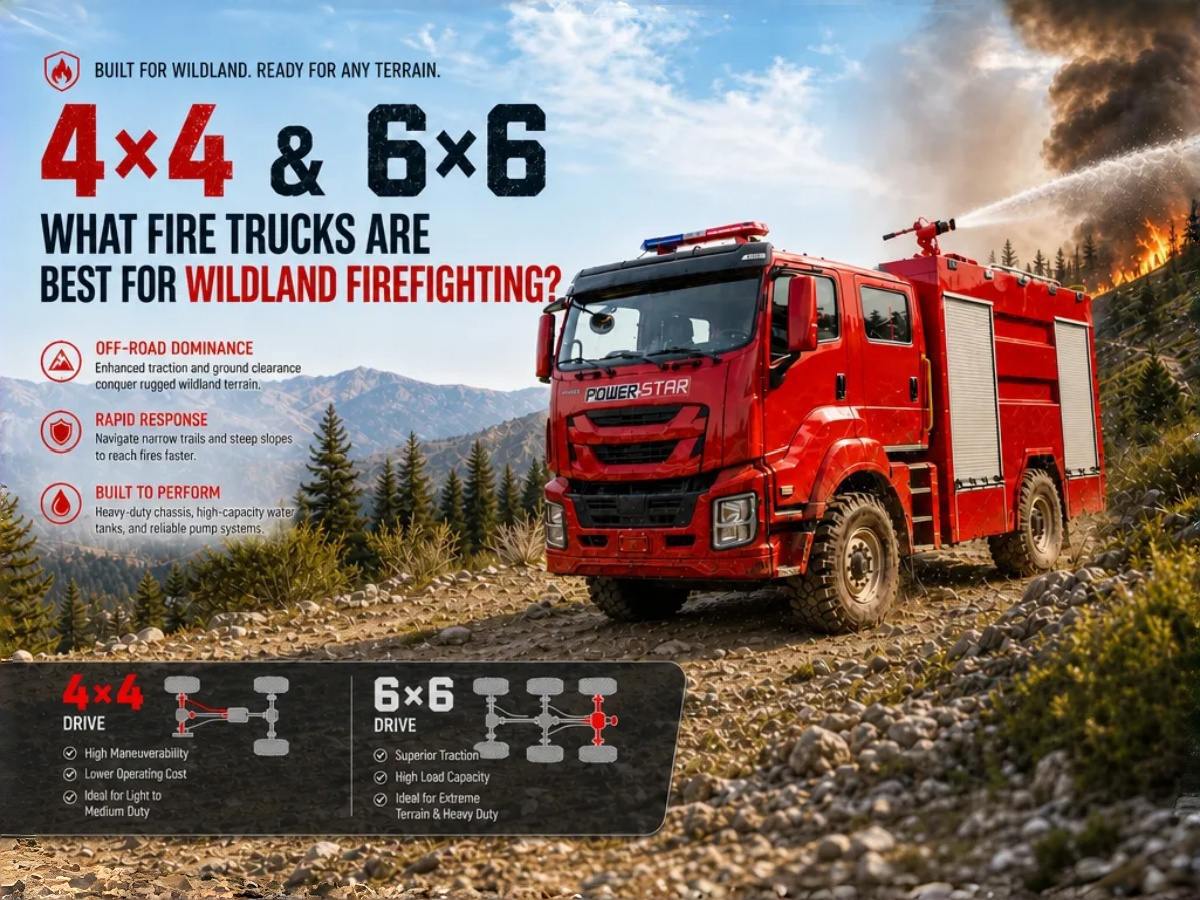
Wildland firefighting presents challenges that are fundamentally different from structural firefighting. In remote forests, grasslands, and mountainous terrain, fire trucks must navigate narrow trails, climb steep slopes, and operate far from hydrants or water sources. Choosing the right fire fighting truck is a strategic decision that directly impacts response time, crew safety, and fire suppression effectiveness. This article provides a comprehensive breakdown of the most suitable fire truck types for wildland firefighting, their core features, and selection methods, helping you make the right decision based on your specific operational requirements. Quick Answer Wildland fires are characterized by large fire areas, complex terrain, limited water sources, and poor road conditions, so there is no single fire truck that can handle all forest fire scenarios. Generally speaking, wildland firefighting primarily uses the following types of fire trucks: • Light wildland fire trucks: for forest road access and rapid response• 4×4 off-road wildland fire trucks: for mountainous and hilly terrain• 6×6 wildland fire trucks: for large-scale forest fires and extended operations• Water tankers: for continuous water supply and support• Foam fire trucks: for oil facilities, forest equipment, or special fires• Rescue vehicles: for communication, lighting, breaching, and logistics support I. Why Do Wildland Fires Require Specialized Fire Trucks? Wildland fires differ fundamentally from structural fires in several critical ways: Key characteristics of wildland fires:• Large fire areas covering hectares of land• Rapidly changing wind directions• Complex and rugged terrain• Limited or no access to hydrants or water sources• Narrow, unpaved forest roads• Difficult communication conditions Standard urban fire trucks are generally unsuitable for wildland firefighting for the following reasons: • Lack 4×4 or all-wheel drive for unpaved mountain roads and steep slopes;• Larger size and low ground clearance make them prone to getting stuck on narrow forest trails and soft terrain;• Urban pumps prioritize high flow at moderate pressure, while wildland operations require high pressure over long hose lays with limited water—a fundamentally different approach. II. Common Types of Wildland Fire Trucks Fire Truck Type Key Characteristics Applicable Scenarios Light Wildland Fire Truck High mobility, compact size Forest patrol, initial attack 4x4 Wildland Fire Truck Strong off-road capability Mountainous and hilly terrain 6x6 Wildland Fire Truck Large water capacity, long endurance Large-scale forest fires Water Tanker Continuous water supply Logistics support, water relay Foam Fire Truck Special fire suppression Forest oil depots, equipment areas Rescue Vehicle Equipment transport Comprehensive rescue operations III. What Key Performance Features...
Details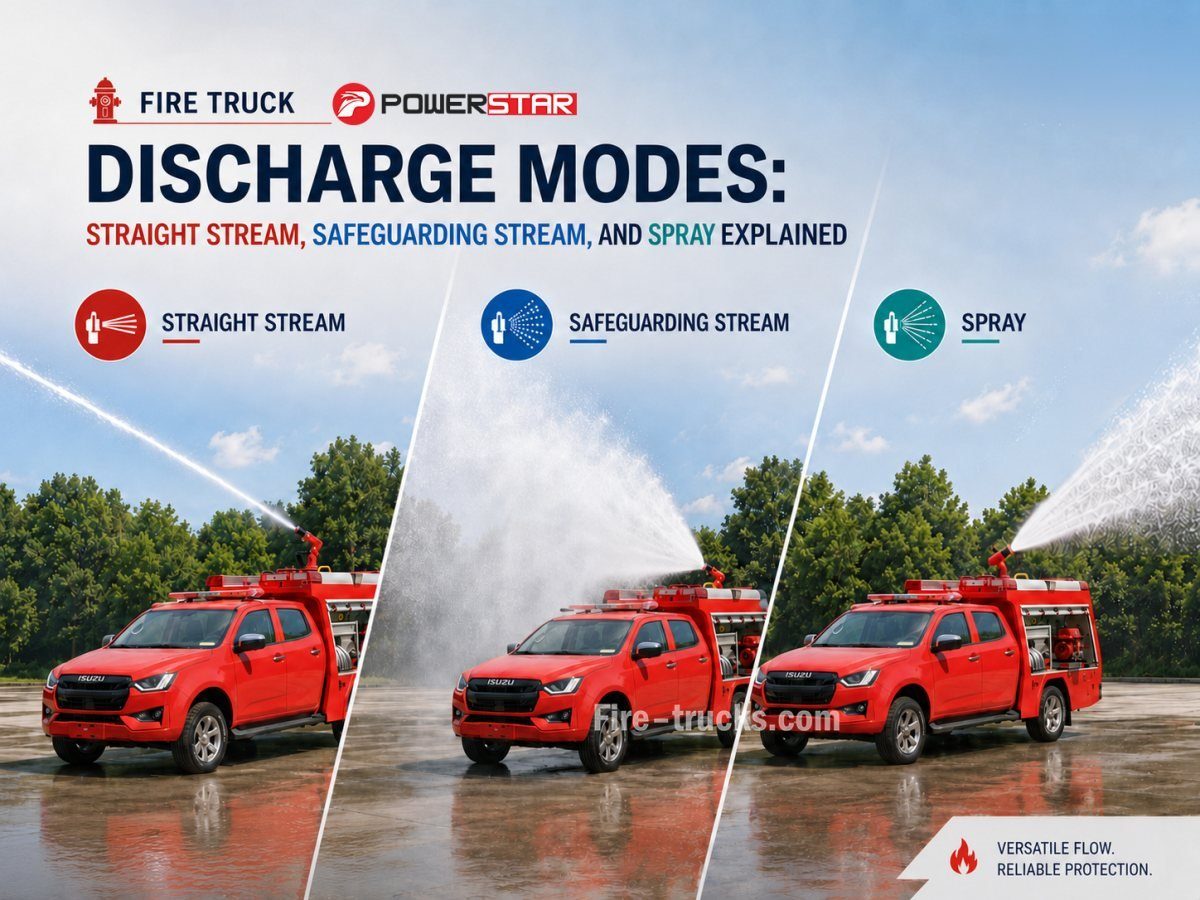
In firefighting operations, the selection of discharge mode directly determines fire extinguishing efficiency, operational safety, and fire control effectiveness. Most people are unaware that fire truck nozzles can switch among three core discharge modes: straight stream, spray stream, and safeguarding stream. Different modes vary significantly in flow pattern, range, impact force, and coverage area, and each corresponds to completely different applicable fire scenarios. This article, based on professional firefighting operation standards, comprehensively analyzes the principles, key characteristics, and applicable scenarios of the three discharge modes, helping our customers systematically master fire truck discharge techniques. I. Why Do Fire Trucks Need Different Discharge Modes? Straight stream, spray stream, and safeguarding stream correspond to three different fire extinguishing mechanisms: impact extinguishing, vaporization suffocation, and thermal radiation protection. Firefighters must flexibly switch according to site conditions. So, why can't we keep using just one type of stream? 1. Diversity of fire types requires different extinguishing media forms Different fire types have different combustion characteristics, which determine the appropriate extinguishing method: • Class A solid material fires require straight stream impact to break up burning materials and penetrate for internal cooling; • Class B liquid fires cannot use straight stream impact (which causes splashing and spreads the fire), but should use safeguarding or spray stream for covering and dilution; • Class E energized electrical fires can only use spray stream, as fine water droplets do not form a continuous conductive path; • Enclosed space fires require spray stream to fill the entire space, achieving extinguishment through vaporization heat absorption and suffocation. No single mode can adapt to all fire types. 2. Different stages of the same fire require different tactical approaches Even for the same fire, different stages require different discharge modes: • In the initial stage when the fire is intense, straight stream is needed for long-range impact on the fire point for rapid suppression; • During advancement, safeguarding stream is needed to form a water curtain barrier to block thermal radiation and protect personnel; • Before entering a room, spray stream is needed to cool and dilute smoke and gases, creating conditions for interior attack. A single mode cannot cover the operational needs throughout the entire firefighting process. 3. Range, coverage area, and cooling efficiency cannot be achieved simultaneously The three modes each have their own advantages and disadvantages in three key dimensions: • Straight stream has the longest range (up to 120m+), but small coverage area, only point-shaped; • Spray stream fills the space and has the highest vaporization heat absorption efficiency, but the shortest rang...
Details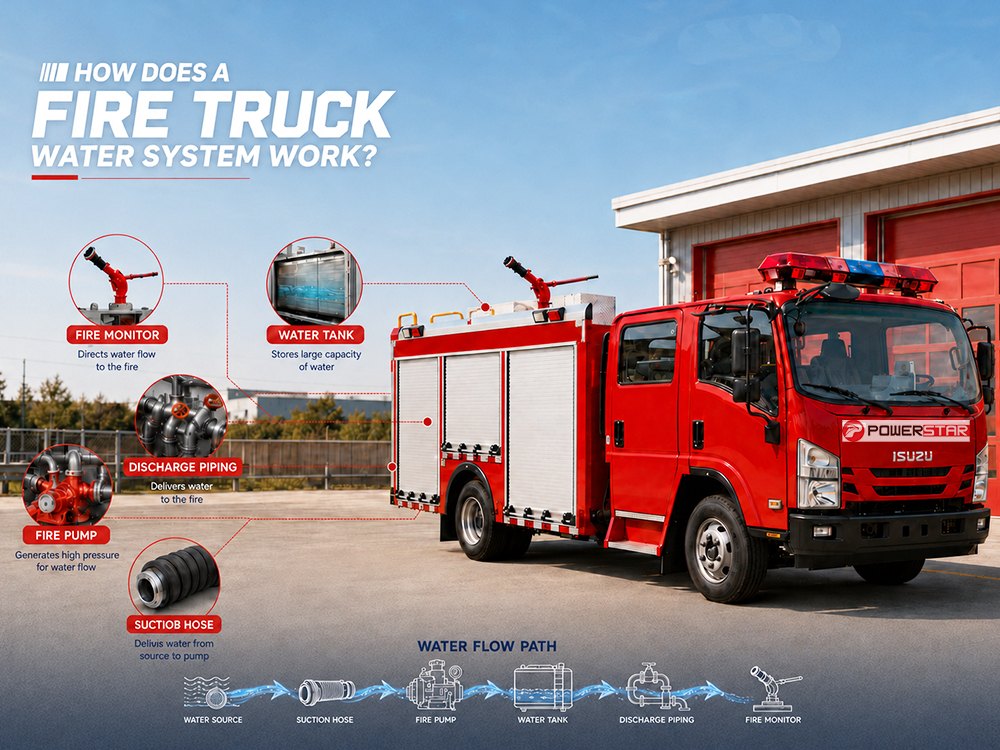
The fire truck water plumbing system is the core of every firefighting operation. It precisely directs water from the tank or an external source through the pump, valves, and piping to deliver high-pressure water or foam to the fire scene — whether it is a high-rise building fire in a dense city center or a petrochemical storage tank fire in an industrial zone. The fire truck water plumbing system consists of multiple components working together: fire pump, water tank, suction hose, discharge piping, valves, dividing breaching, collecting breaching, strainer, fire monitor, hose couplings, and more. The complete flow path is: Water Tank → Suction Hose → Strainer → Fire Pump → Pressure Regulation System → Discharge Manifold → Valves → Dividing Breaching → Fire Monitor / Hose Couplings → Nozzle This article explains each component of the water plumbing system and how they work together to deliver water at the right pressure and flow. I. Core Components of the Water Plumbing System Water Tank Stores onboard water supply. ● Capacity: Typically 2,000–12,000 liters. ● Delivery: Feeds the pump through intake piping. ● Features: Anti-slosh baffles for vehicle stability, strainer to filter debris, and priming system for drafting from natural water sources. Fire Pump A centrifugal pump driven by the truck engine through PTO; single/multi-stage, cast iron or bronze. ● Pressure grades: Available in standard ratings of 0.8 MPa, 1.0 MPa, 1.2 MPa, and 1.4 MPa, matching typical firefighting requirements. ● Flow rates: Ranges from 1,200 to 6,000 L/min, with performance curves optimized for both high-pressure and high-volume operations. Valves and Piping A network of pipes and valves that controls the direction and volume of water flow. ● Intake valve: Connects the pump to external water sources (hydrant or drafting point) ● Tank-to-pump valve: Allows the pump to draw water directly from the onboard tank ● Discharge valves: Control water flow to hoses and nozzles II. How the Fire Truck Water Plumbing System Works Step 1: Water Intake and Priming Water enters the system from the onboard tank, fire hydrant, or natural water sources (lakes, rivers, ponds). When drafting from natural sources, the priming system (vacuum pump) removes air from the suction hose, creating a vacuum that allows atmospheric pressure to push water into the pump. A strainer filters debris to protect the pump, and a check valve prevents backflow. Step 2: Pump Pressurization The centrifugal pump is driven by the truck engine through a power take-off (PTO). Once water fills the pump, the impeller spins at high speed (1,500–2,500 RPM). Centrifugal force throws water outward, increasing its velocity. The pump casing converts this velocity into pressure (typically 0.8–1.2 MPa). An electronic pressure governor automatically maintains the set pressure, while a relief valve prevents over-press...
Details
Please subscribe latest fire trucks news, and Warmly welcome to tell us what you think.

 IPv6 network supported
Links :
ISUZU Trucks
CEEC Trucks
CS Trucks
IPv6 network supported
Links :
ISUZU Trucks
CEEC Trucks
CS Trucks

 English
 français
 Deutsch
 русский
 italiano
 español
 português
 Nederlands
 العربية
 日本語
日本語 한국의
한국의 Türkçe
 Melayu
 ไทย
ไทย Tiếng Việt
 Indonesia
  中文
中文 қазақ
қазақ Filipino
 မြန်မာ
 српски