Leave A Message
If you are interested in our products and want to know more details,please leave a message here,we will reply you as soon as we can.

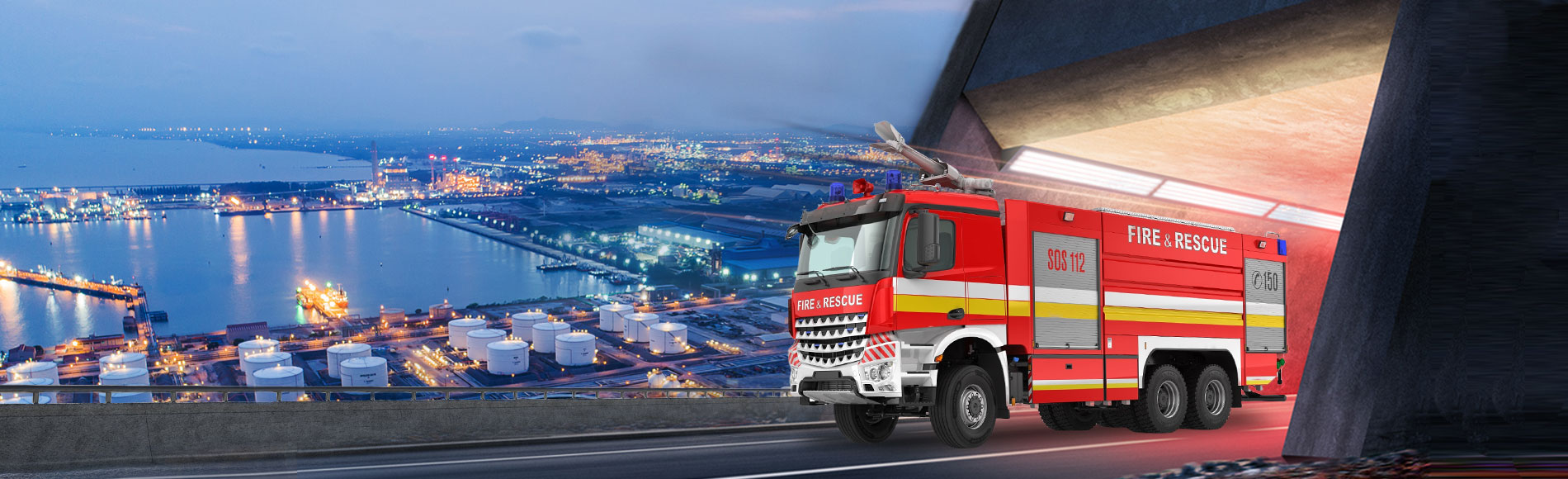
aerial firefighting truck operating range
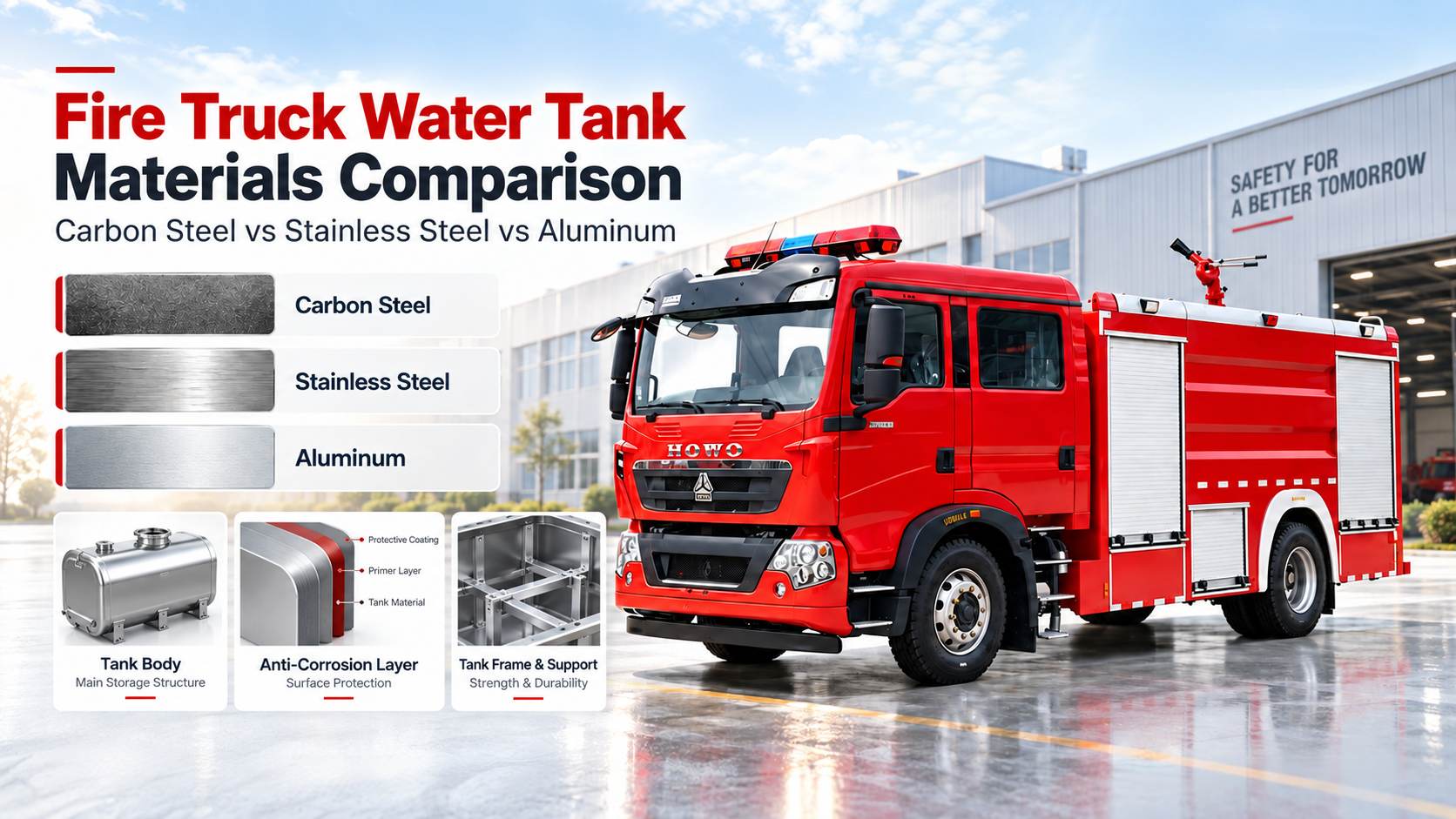
During fire apparatus procurement, our customers typically prioritize chassis performance, fire pump flow and pressure ratings, and firefighting system configuration. However, the choice of fire truck water tank material is equally important, as it directly affects the vehicle's service life, corrosion resistance, maintenance cost, and long-term operational reliability. As a professi...
Read More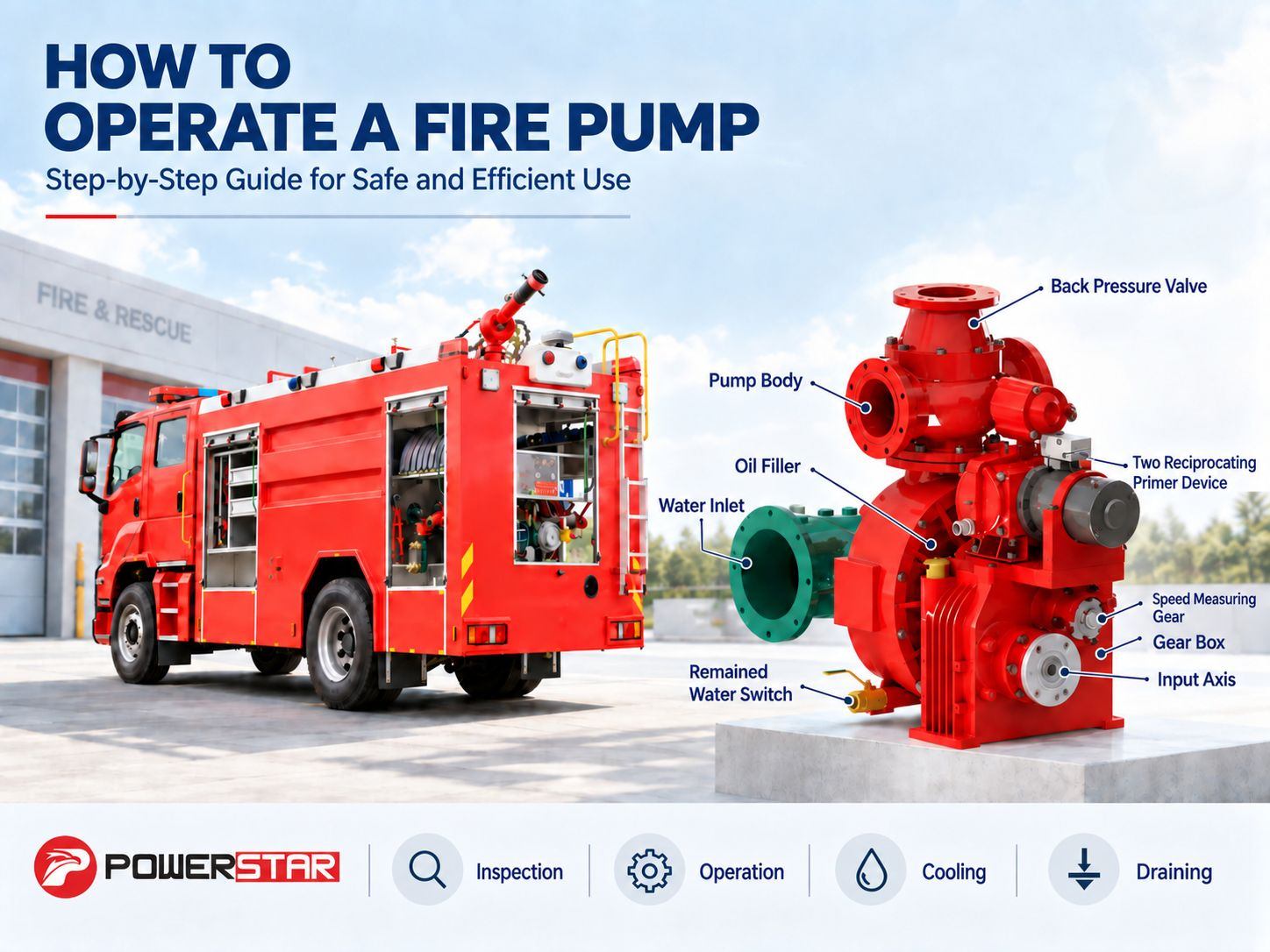
Operating a fire truck pump requires the correct sequence of valve operation, water supply connection, pump priming, PTO engagement, and pump start-up. Before operating the system, the operator should confirm that the fire truck is safely positioned and that all valves, pipelines, and control devices are in the correct positions. This guide describes the standard operating procedure ...
Read More
Fire truck tank baffles work on the principles of slosh suppression and energy dissipation in fluid mechanics. When a fire truck accelerates, brakes, or turns during driving, the water inside the tank generates severe sloshing forces. By installing perforated partitions inside the tank, baffles divide the large water volume into multiple smaller compartments. The orifice throttling effect dissipat...
Read More
The top of a fire truck water tank is not a flat cover—it is a working platform that integrates filling, ventilation, overflow protection, firefighting equipment, and crew safety. Every component mounted on the fire truck tank top serves a specific function during water supply and firefighting operations. Understanding this fire truck layout is essential for apparatus specifiers, pump operat...
Read More
A fire monitor—also called a fire truck water cannon or vehicle-mounted monitor—is a core component of modern fire truck apparatus. It discharges high-volume water streams or firefighting foam, helping firefighters suppress fires in high-rise buildings, industrial facilities, and other areas that are difficult to approach directly or present significant safety risks. But choosing the r...
Read More
A foam fire truck is a specialized firefighting vehicle designed to transport, mix, and discharge water and foam extinguishing agents for efficient fire suppression. Unlike standard fire trucks that rely primarily on water, foam fire trucks are equipped with a dedicated foam system that mixes water and foam concentrate at a preset ratio to form foam solution. A foam fire truck can discharge water ...
Read More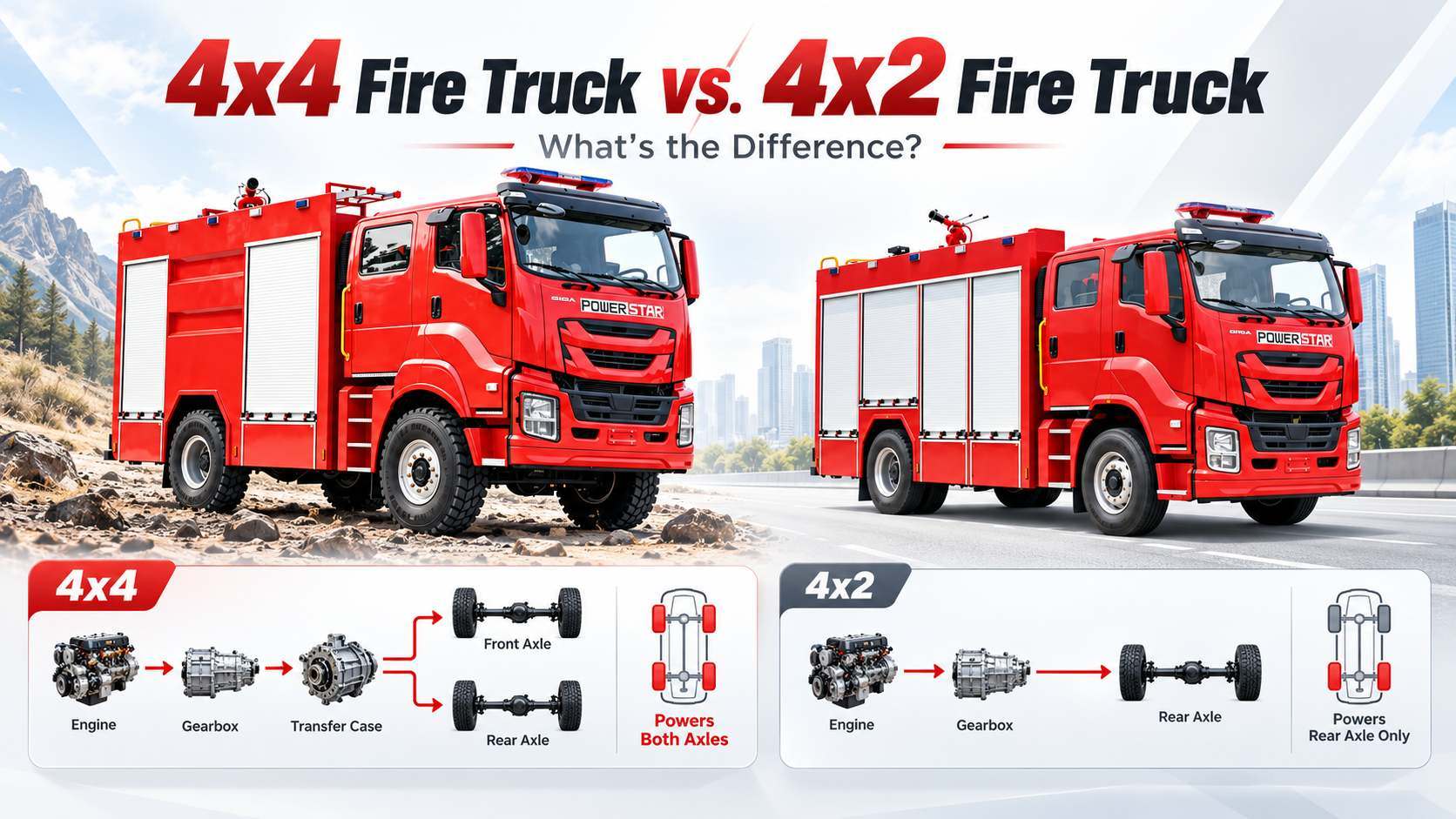
When specifying a fire truck, one of the first chassis decisions is the drive configuration. A 4×2 fire truck drives through two wheels on a single axle, while a 4×4 fire truck delivers power to all four wheels. That difference may sound simple, but it changes where the truck can go, how much it costs, and what kind of fire scenarios it can handle. This guide explains the practic...
Read More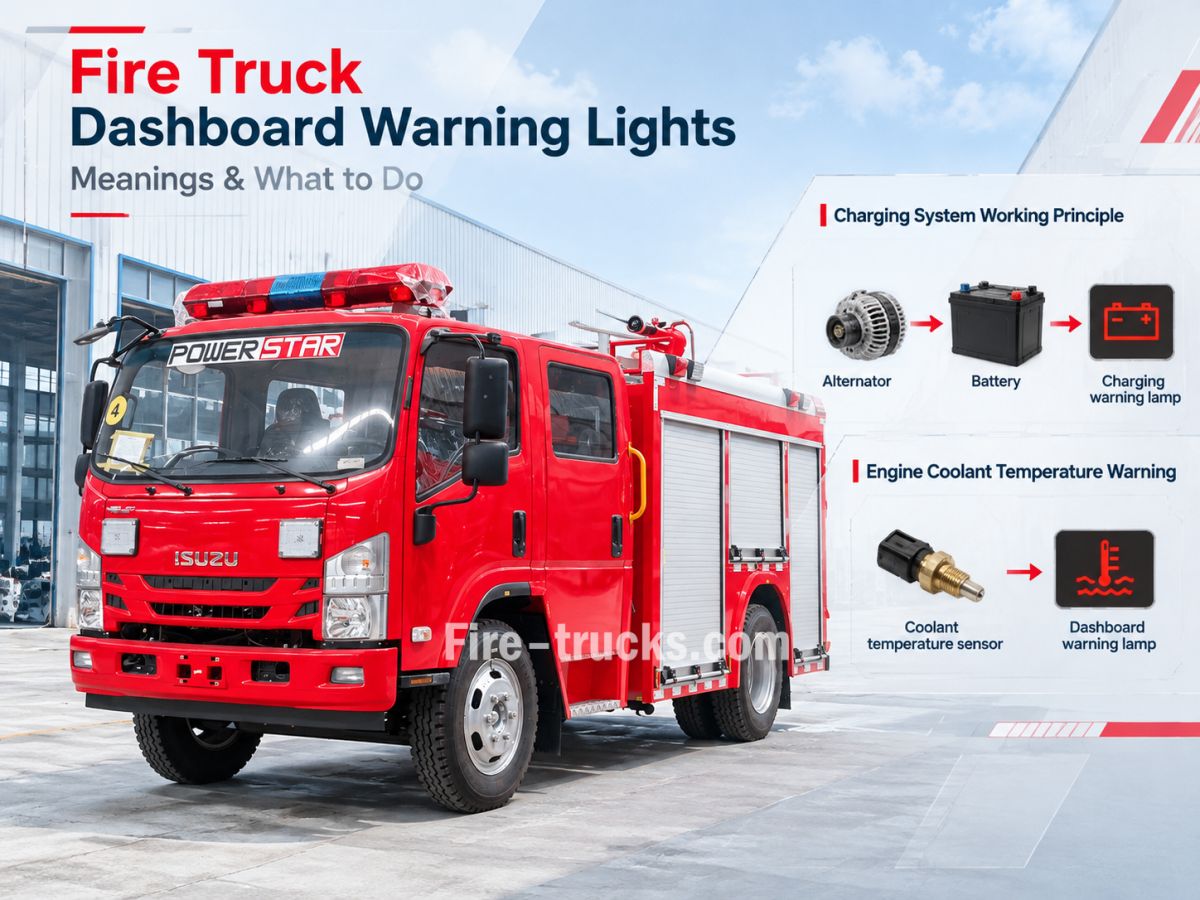
When a fire truck starts, numerous warning lights illuminate in the center of the dashboard and then automatically turn off after a few seconds. This process is the vehicle's self-check system. To help drivers fully master the overall condition of a fire truck, it is essential to understand these instruments and use them to judge whether each component is working normally. Common indicator lights ...
Read More


Please subscribe latest fire trucks news, and Warmly welcome to tell us what you think.

 IPv6 network supported
Links :
ISUZU Trucks
CEEC Trucks
CS Trucks

 English
 français
 Deutsch
 русский
 italiano
 español
 português
 Nederlands
 العربية
 日本語
 한국의
 Türkçe
 Melayu
 ไทย
 Tiếng Việt
 Indonesia
 中文
 қазақ
 Filipino
 မြန်မာ
 српски