Leave A Message
If you are interested in our products and want to know more details,please leave a message here,we will reply you as soon as we can.

carbon steel vs stainless steel water tank

Water fire trucks fight ordinary fires involving wood, paper, and cloth. Foam fire trucks fight flammable liquid fires like gasoline and oil. Which one is right depends on the hazards present. A water fire truck carries a large tank of water and relies on a high-pressure pump to deliver water through hoses or a deck gun. It is the most common type of fire truck used by municipal fire dep...
Read More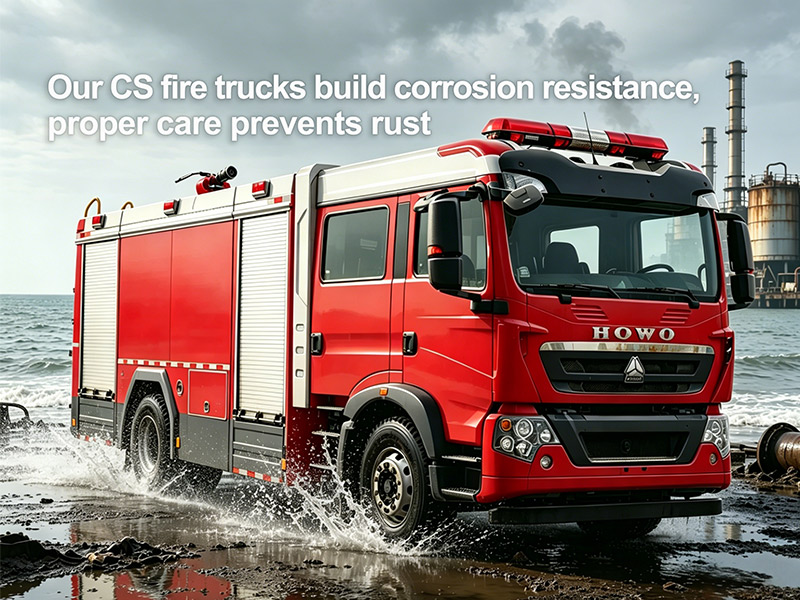
Fire trucks operate in harsh environments — humid climates, chemical spills, coastal salt spray. Without effective corrosion protection, metal components of a fire fighting vehicle rust, structures weaken, and firefighting capability drops. This article explains how rust forms, which tank materials resist corrosion best, and what coatings actually work. I. Three Common Types of Corrosion on ...
Read More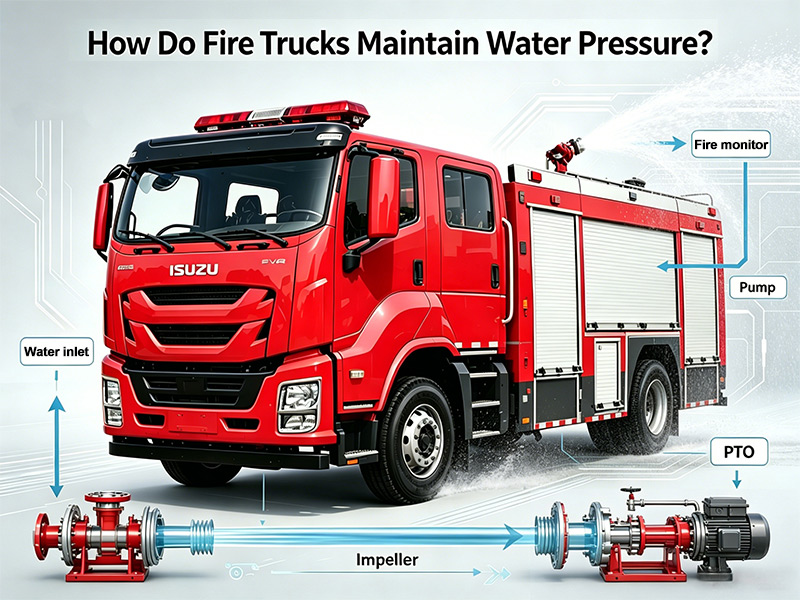
Water pressure is the driving force behind every firefighting operation. Without adequate pressure, water cannot reach the fire, penetrate burning materials, or be effective. Fire fighting trucks must not only generate pressure but also maintain it consistently throughout the entire firefighting operation. This article explains how fire trucks produce, control, and sustain water pressure, covering...
Read More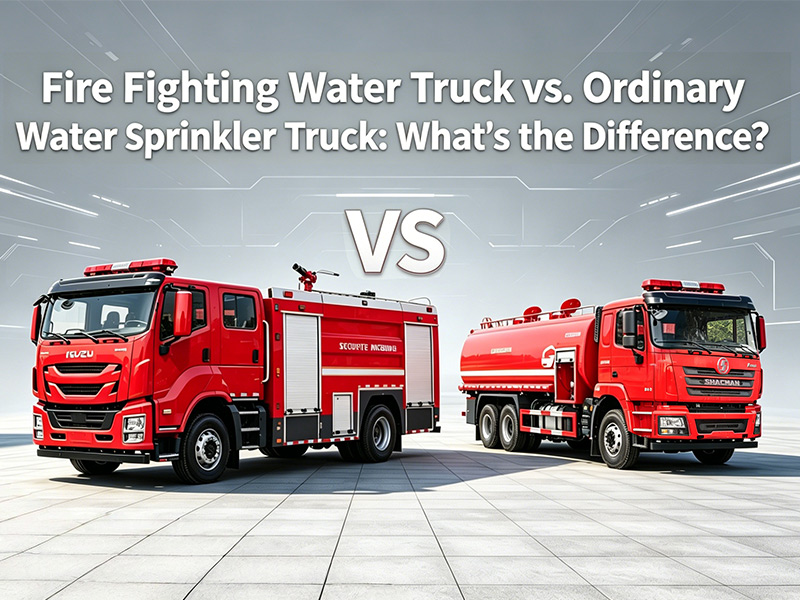
A fire fighting water truck and an ordinary water truck may look similar. Both are large vehicles with water tanks, pumps, and hoses. However, their design, components, and intended purposes are fundamentally different. This article explains the key differences between fire fighting water trucks (also known as multi-purpose water trucks or forest fire trucks) and ordinary water trucks fr...
Read More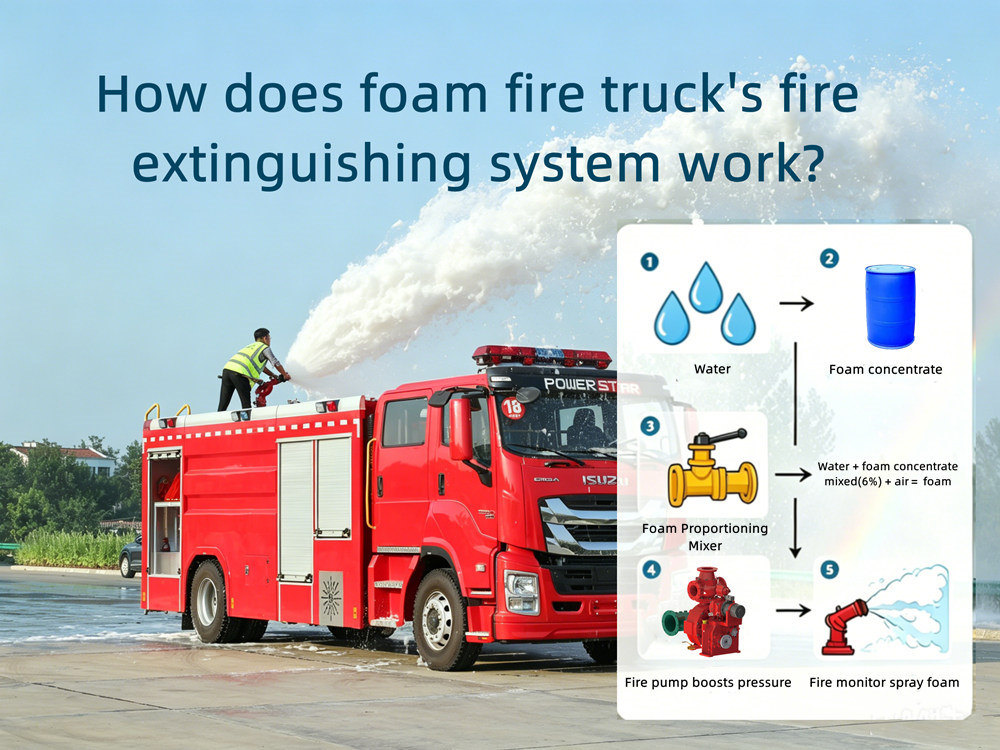
» The Underlying Logic of Foam Fire Extinguishing ★. Why can't water extinguish oil fires? • Density difference: Water is heavier than oil and sinks directly to the bottom, never touching the flame. • Boiling over: The water at the bottom vaporizes instantly upon contact with high temperatures, expanding thousands of times in volume, splattering the o...
Read More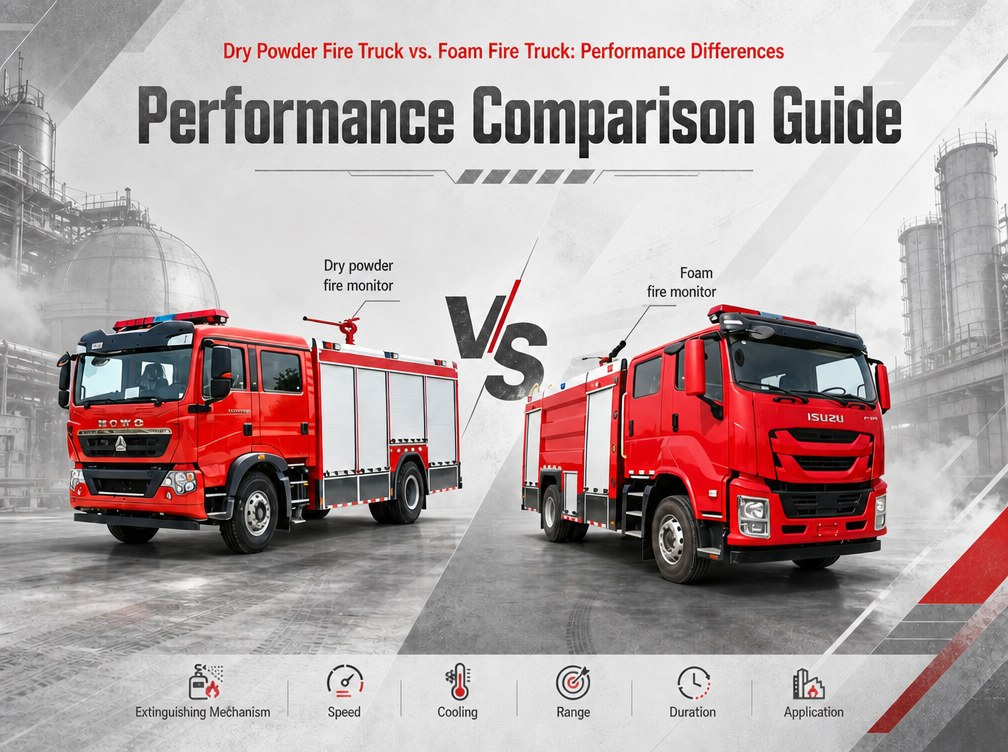
A compressed air foam system (CAFS) fire truck and a dry powder fire truck may both be used for fighting flammable liquid and gas fires. Both are specialized vehicles designed to handle Class B and Class C hazards. However, their extinguishing agents, working principles, and application scenarios are fundamentally different. This article explains the key differences between dry powder fi...
Read More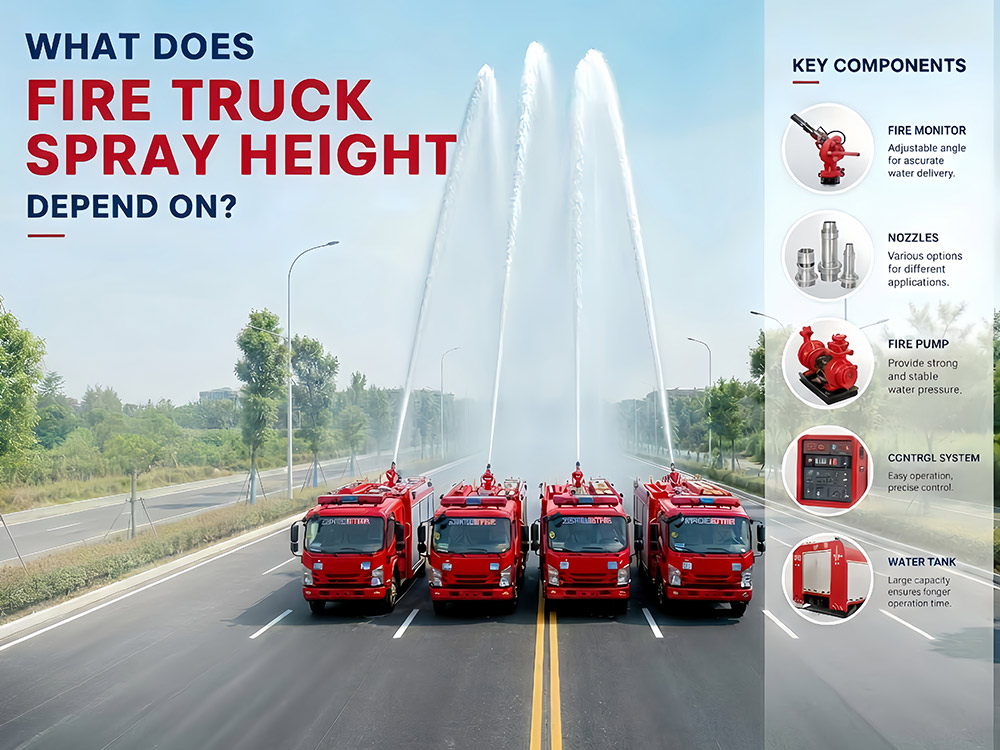
The fire truck pump and spray system is the core of firefighting operations. It acts as the "powerful arm" of the fire truck. By converting engine power into pressure (ranging from 0.8 to 1.4 MPa), it delivers extinguishing agents to heights of up to 85 meters — whether it is a high-rise building fire in a dense city center or a petrochemical storage tank fire in an industrial zone, the fire...
Read More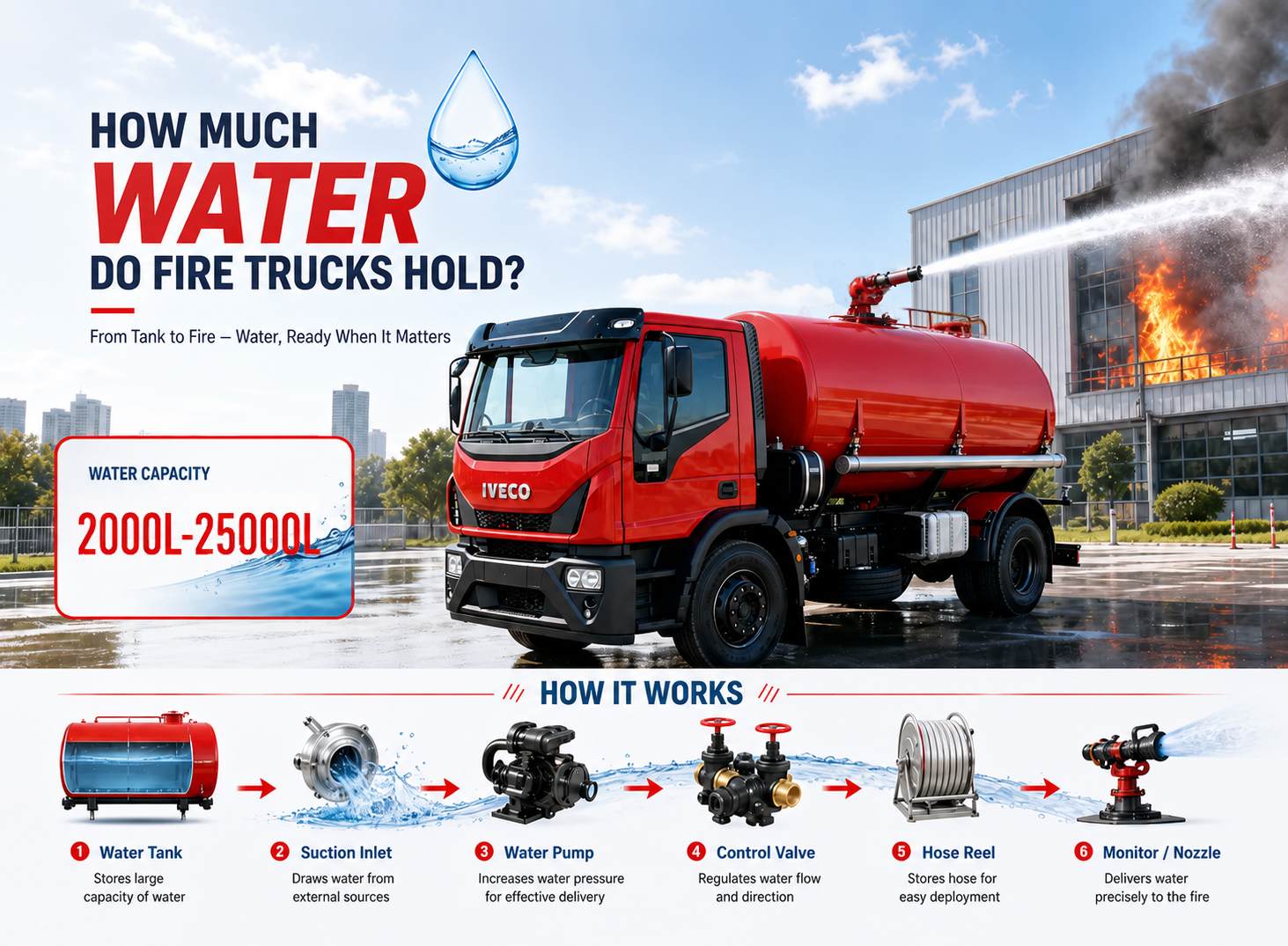
How much water can a fire truck carry? This is one of the first questions our customers face when selecting a fire truck. There is no single fixed number — it depends on vehicle type, chassis capacity, design purpose, and regional regulations, ranging from 2,000 liters light-duty units to 25,000 liters industrial fire trucks. But a larger tank does not always mean better performance; fi...
Read More


Please subscribe latest fire trucks news, and Warmly welcome to tell us what you think.

 IPv6 network supported
Links :
ISUZU Trucks
CEEC Trucks
CS Trucks

 English
 français
 Deutsch
 русский
 italiano
 español
 português
 Nederlands
 العربية
 日本語
 한국의
 Türkçe
 Melayu
 ไทย
 Tiếng Việt
 Indonesia
 中文
 қазақ
 Filipino
 မြန်မာ
 српски