Leave A Message
If you are interested in our products and want to know more details,please leave a message here,we will reply you as soon as we can.

Fire pump series
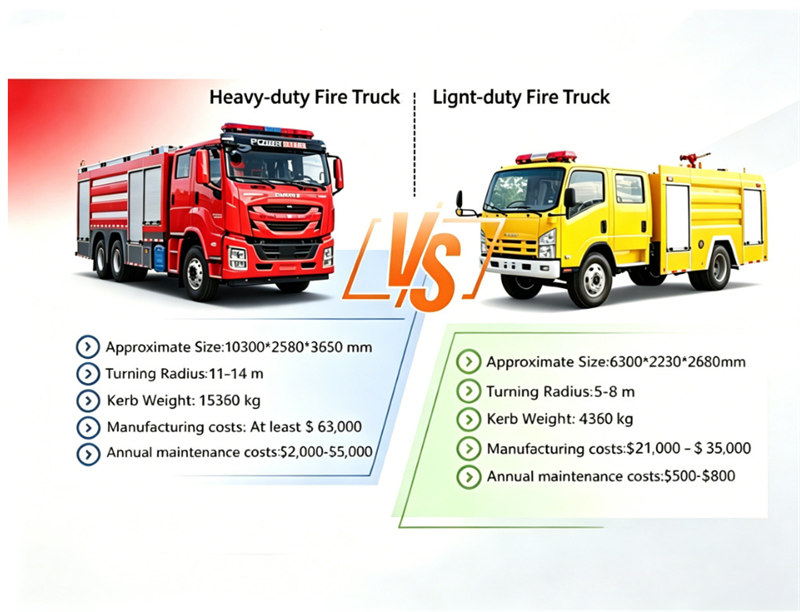
Fire rescue truck needs vary drastically between metropolitan areas and rural or small-town communities. Large urban fire departments rely on heavy duty fire trucks with massive water tanks, high rise ladders, and full industrial-grade configurations to handle high rise fires, industrial blazes, and large-scale emergencies. However, for small cities, rural towns, village fire stations, and volunte...
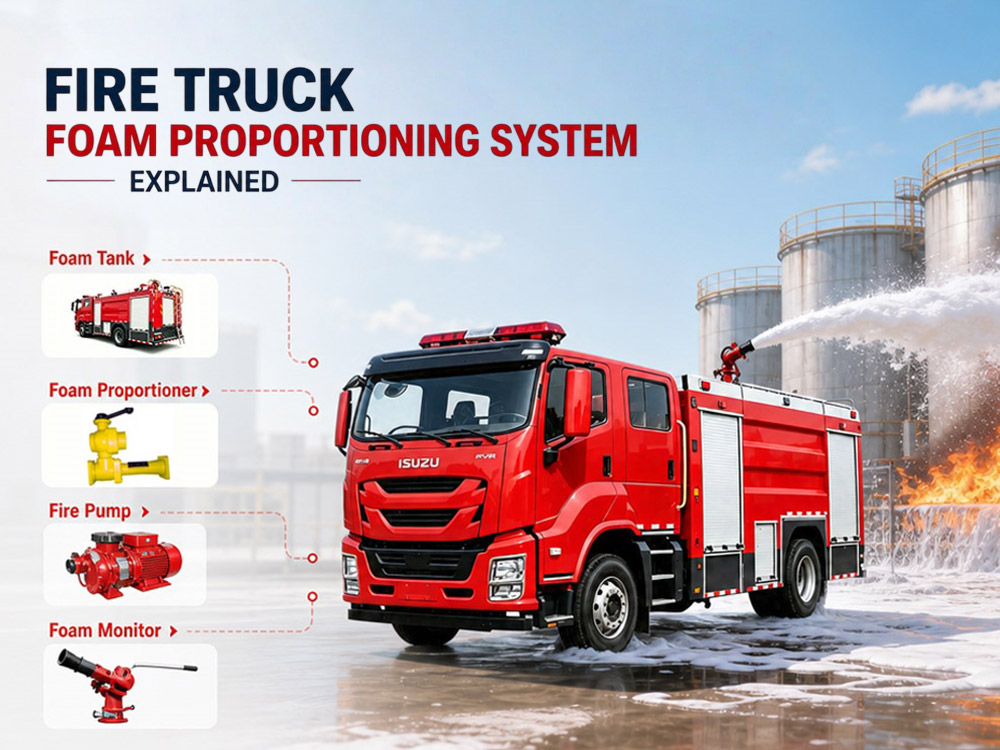
The fire truck foam system mixes water with foam concentrate at precise ratios (1%, 3%, or 6%) to create a foam solution. This solution is then pressurized by the fire pump and expanded with air through foam nozzles — this is the core working principle of how a foam fire truck mixes foam and water — ultimately producing a stable foam blanket that covers the fuel surface. This process i...
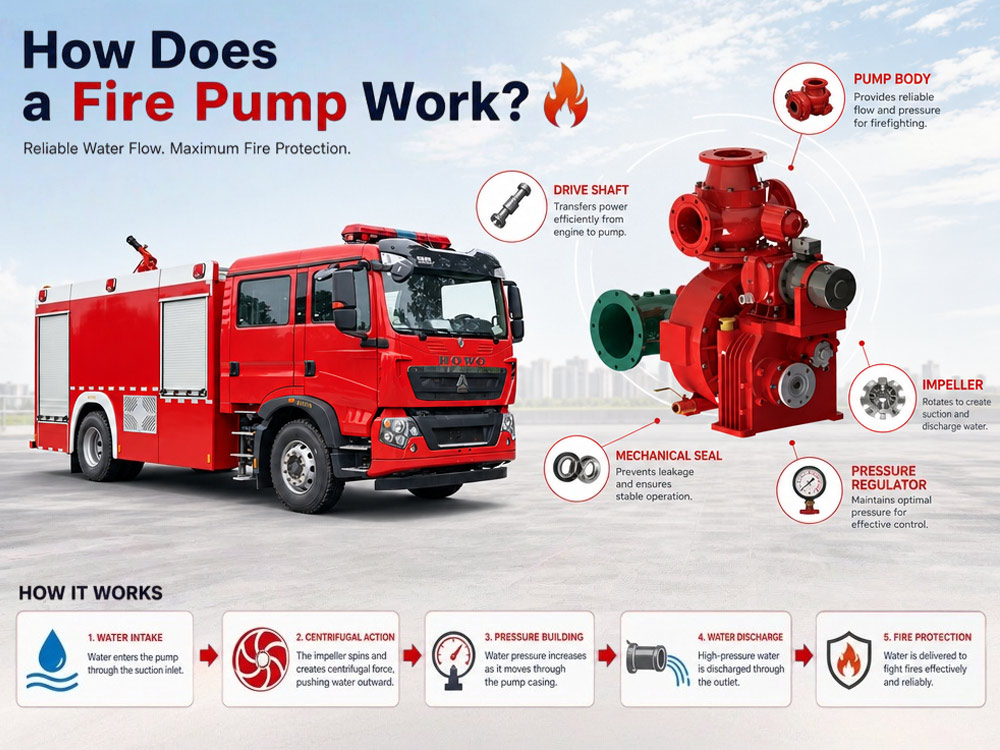
A fire pump is the heart of every fire truck's water delivery system. Whether responding to a structural fire, industrial emergency, airport incident, or wildland operation, the fire pump on a fire truck is responsible for delivering high-pressure water to hoses, fire monitors, and foam systems. Its centrifugal impeller design and PTO-driven system ensure stable pressure and high flow rates, ...
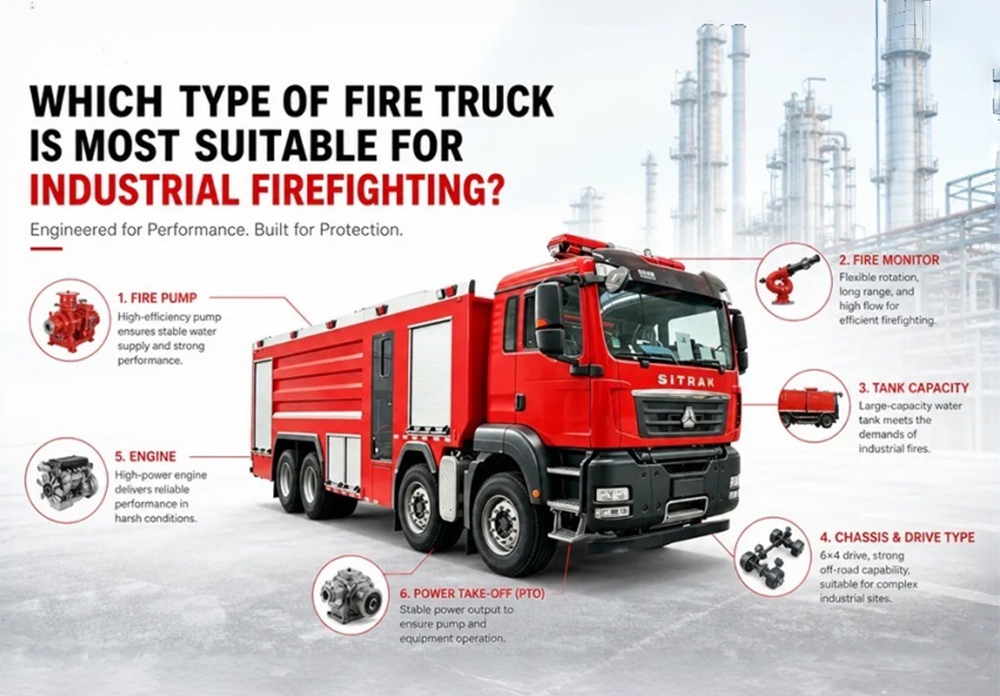
Industrial fires are fundamentally different from ordinary structural fires. Petrochemical plants primarily face flammable liquid and combustible gas fires, while manufacturing facilities and warehousing logistics centers more often deal with ordinary combustible materials — this is why different types of industrial fire trucks are required for different fire risks. This article compares wat...
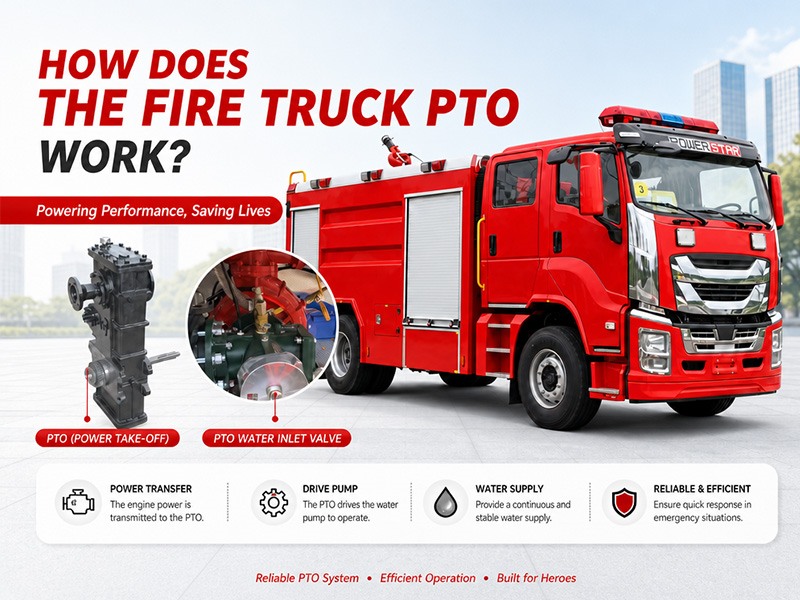
The fire truck PTO (Power Take-Off) is a power transmission device that transfers engine power to the fire pump. When the firefighter activates the PTO, mechanical power from the engine is transmitted through the transmission and PTO to the fire pump — this is the core working principle of how a fire fighting truck PTO system operates — enabling the pump to deliver high-pressure, high-...
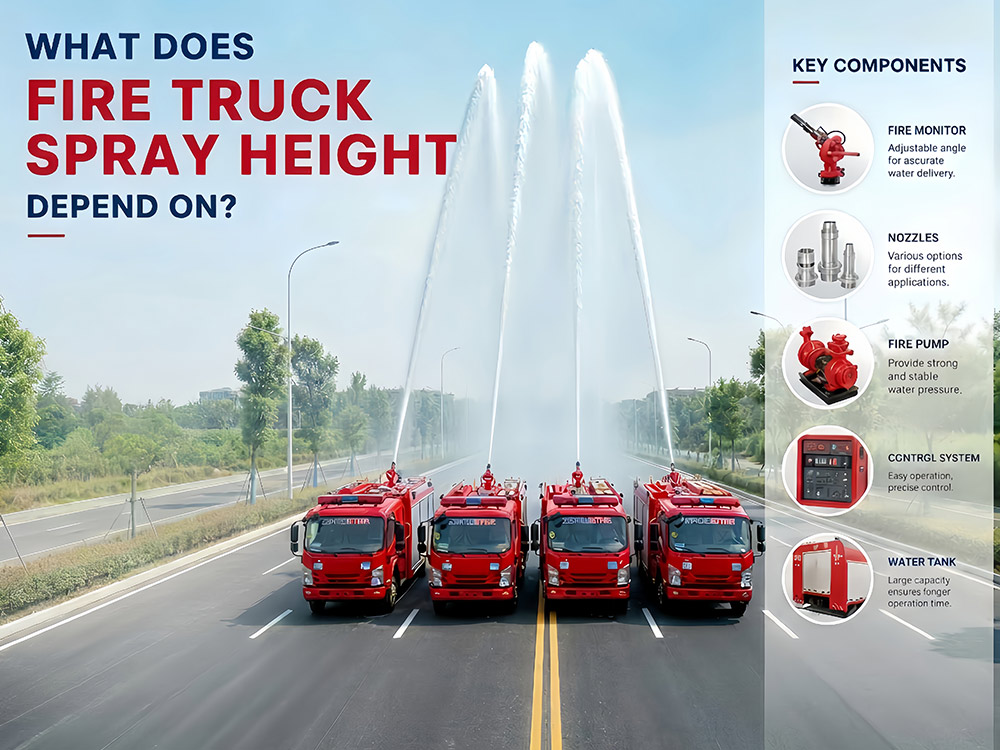
The fire truck pump and spray system is the core of firefighting operations. It acts as the "powerful arm" of the fire truck. By converting engine power into pressure (ranging from 0.8 to 1.4 MPa), it delivers extinguishing agents to heights of up to 85 meters — whether it is a high-rise building fire in a dense city center or a petrochemical storage tank fire in an industrial zone, the fire...
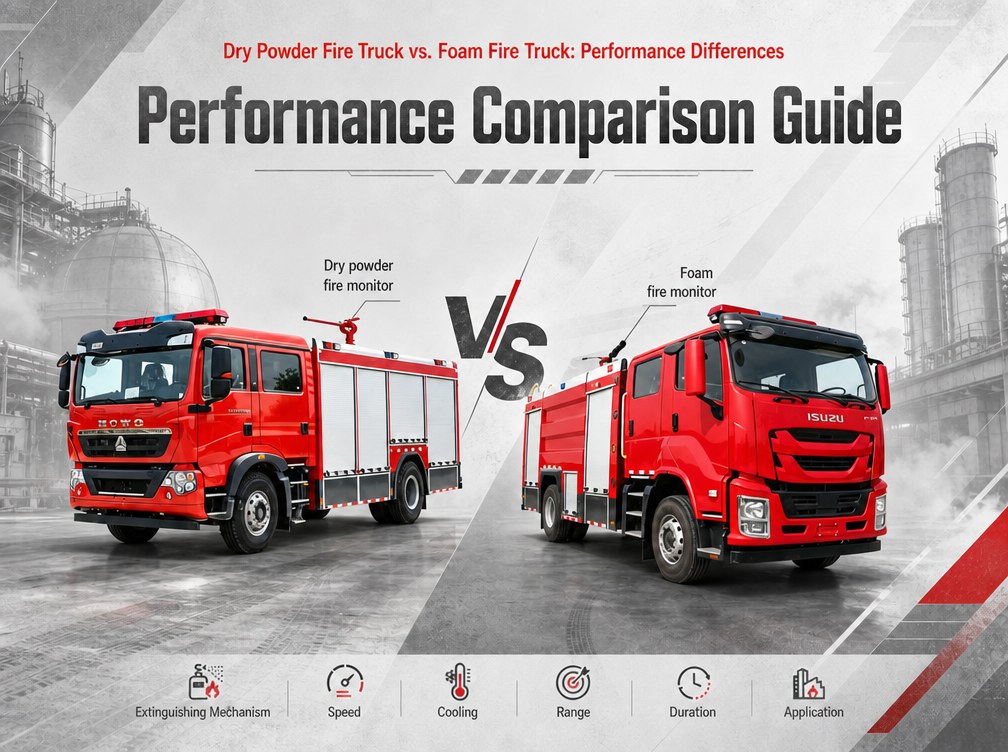
A compressed air foam system (CAFS) fire truck and a dry powder fire truck may both be used for fighting flammable liquid and gas fires. Both are specialized vehicles designed to handle Class B and Class C hazards. However, their extinguishing agents, working principles, and application scenarios are fundamentally different. This article explains the key differences between dry powder fi...
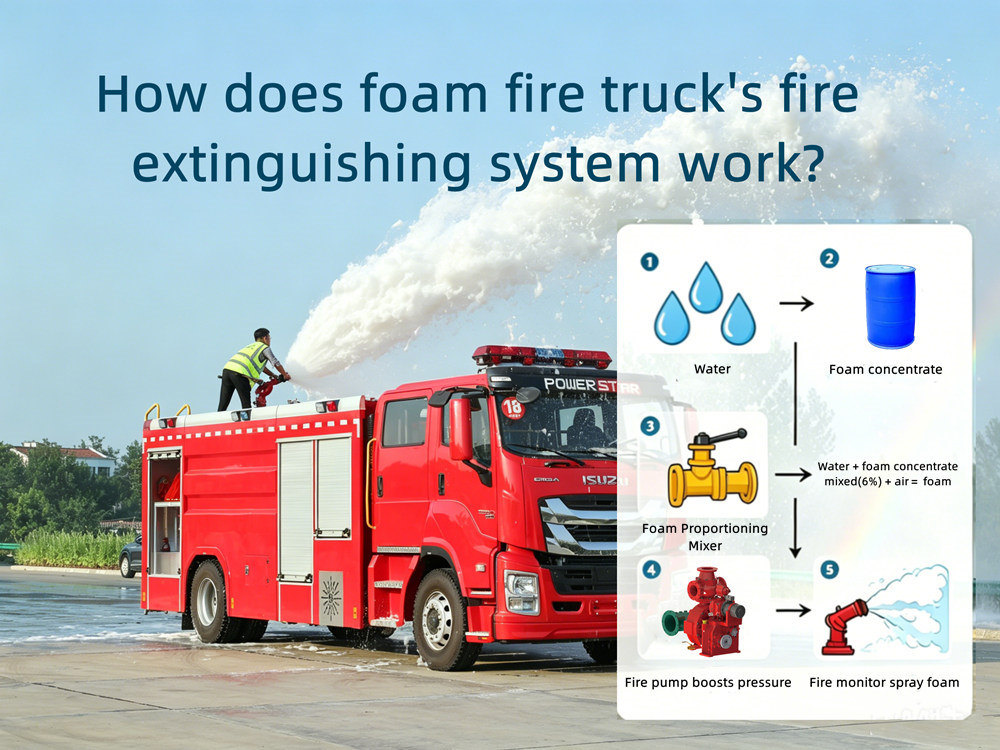
» The Underlying Logic of Foam Fire Extinguishing ★. Why can't water extinguish oil fires? • Density difference: Water is heavier than oil and sinks directly to the bottom, never touching the flame. • Boiling over: The water at the bottom vaporizes instantly upon contact with high temperatures, expanding thousands of times in volume, splattering the o...
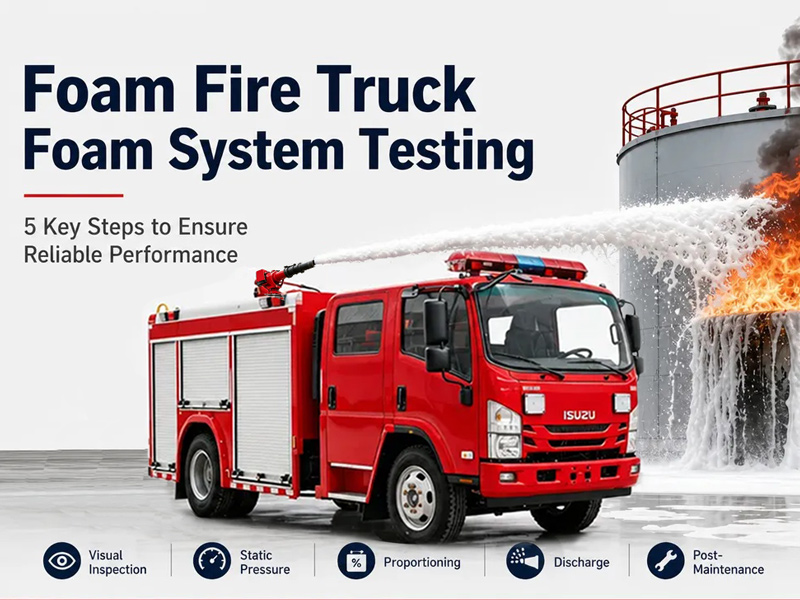
The foam fire truck is the core equipment for fighting flammable liquid fires. By precisely mixing foam concentrate with water at ratios of 1%, 3%, or 6% (accuracy ±0.5%), this foam fire truck delivers a uniform foam blanket for jet fuel fires at airports or tank fires at refineries. Its stainless steel foam tank and intelligent proportioning system ensure zero mixing errors, increasing fir...


Please subscribe latest fire trucks news, and Warmly welcome to tell us what you think.

 IPv6 network supported
Links :
ISUZU Trucks
CEEC Trucks
CS Trucks
IPv6 network supported
Links :
ISUZU Trucks
CEEC Trucks
CS Trucks

 English
 français
 Deutsch
 русский
 italiano
 español
 português
 Nederlands
 العربية
 日本語
日本語 한국의
한국의 Türkçe
 Melayu
 ไทย
ไทย Tiếng Việt
 Indonesia
  中文
中文 қазақ
қазақ Filipino
 မြန်မာ
 српски